Response to FDA’s Request for Feedback on Considerations for the Regulation of GenAI-Enabled Medical Devices
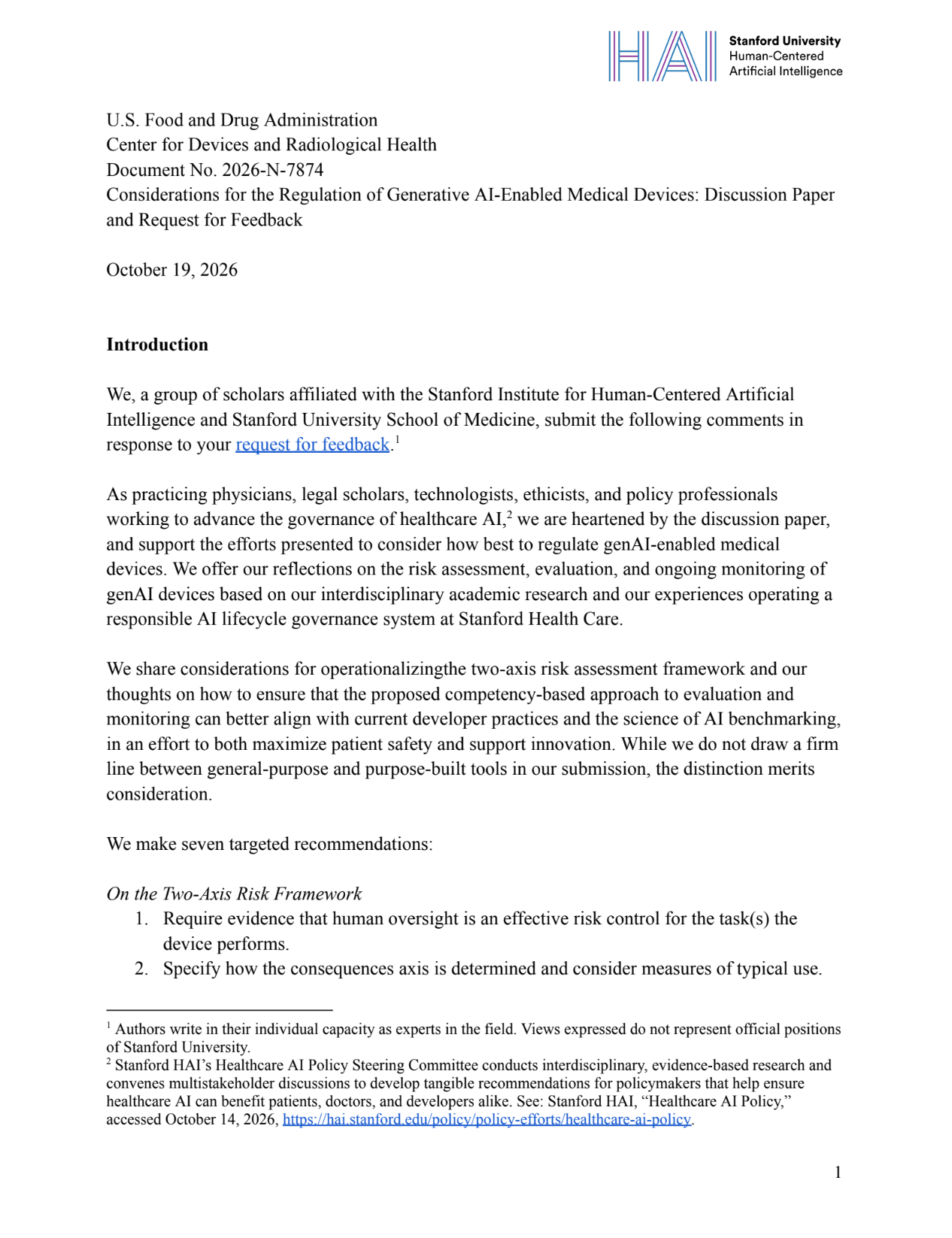
Stanford scholars respond to a federal request for feedback, offering policy recommendations for the regulation of generative AI-enabled medical devices.
Executive Summary
In this response to a discussion paper and request for feedback issued by the Food and Drug Administration (FDA), scholars from Stanford HAI and Stanford University’s School of Medicine share reflections on the FDA’s considerations for the regulation of generative AI-enabled medical devices. Their recommendations focus on challenges related to operationalizing the two-axis risk assessment framework and ensuring that the proposed competency-based approach to evaluation and monitoring can both maximize patient safety and support innovation. These include:
On the Two-Axis Risk Framework
Require evidence that human oversight is an effective risk control for the task(s) the device performs.
Specify how the consequences axis is determined and consider measures of typical use.
On Premarket Evaluation
Strengthen benchmarking to address construct validity and prevent metric optimization at the expense of utility.
Establish real-world prospective testing as a supplement or alternative to benchmarking.
On Postmarket Evaluation
Place greater accountability for postmarket monitoring on developers and equip healthcare institutions with the ability to support continued monitoring.
Use hybrid monitoring, with machine-based monitoring tools to flag issues and humans as the final arbiters.
Ensure that postmarket monitoring occurs by requiring a prespecified monitoring plan.
Related Publications
Implementing the Transparency in Frontier AI Act Report for the California Department of Technology Multistakeholder Workshops
In this paper, HAI Associate Director and Senior Fellow Rob Reich and UC Berkeley School of Information Professor Deirdre K. Mulligan provide concrete recommendations to the California Department of Technology on the implementation of its frontier AI transparency requirements.
In this paper, HAI Associate Director and Senior Fellow Rob Reich and UC Berkeley School of Information Professor Deirdre K. Mulligan provide concrete recommendations to the California Department of Technology on the implementation of its frontier AI transparency requirements.
Designing Loyalty: AI Agents and Conflicts of Interest
This brief examines the conflict-of-interest risks posed by AI agents and calls for imposing a duty of loyalty on developers and deployers.
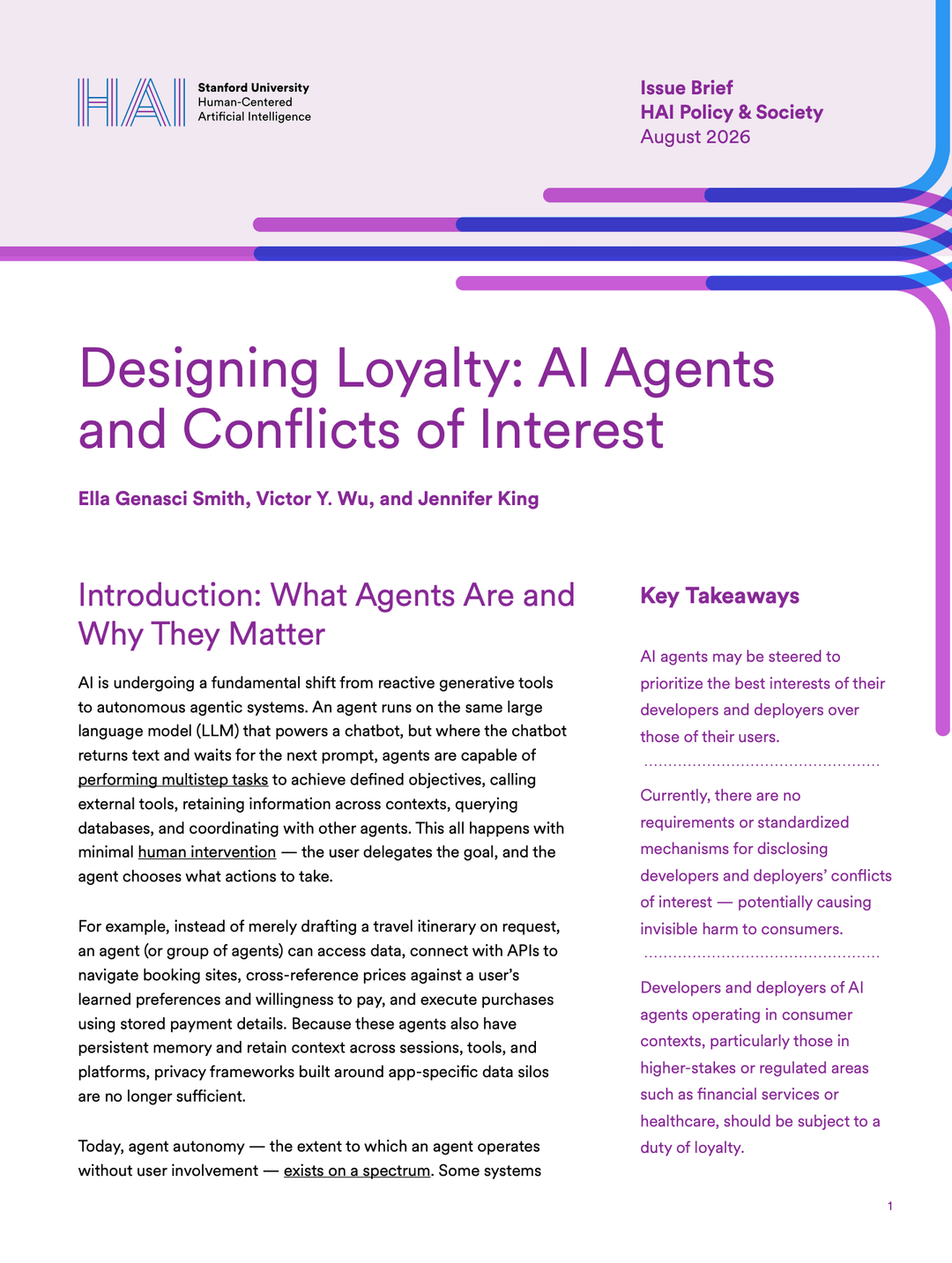
This brief examines the conflict-of-interest risks posed by AI agents and calls for imposing a duty of loyalty on developers and deployers.
Regulating Data Brokers in the Age of AI: A California Case Study
This brief assesses data broker compliance with California privacy laws and calls for more stringent consumer protections.
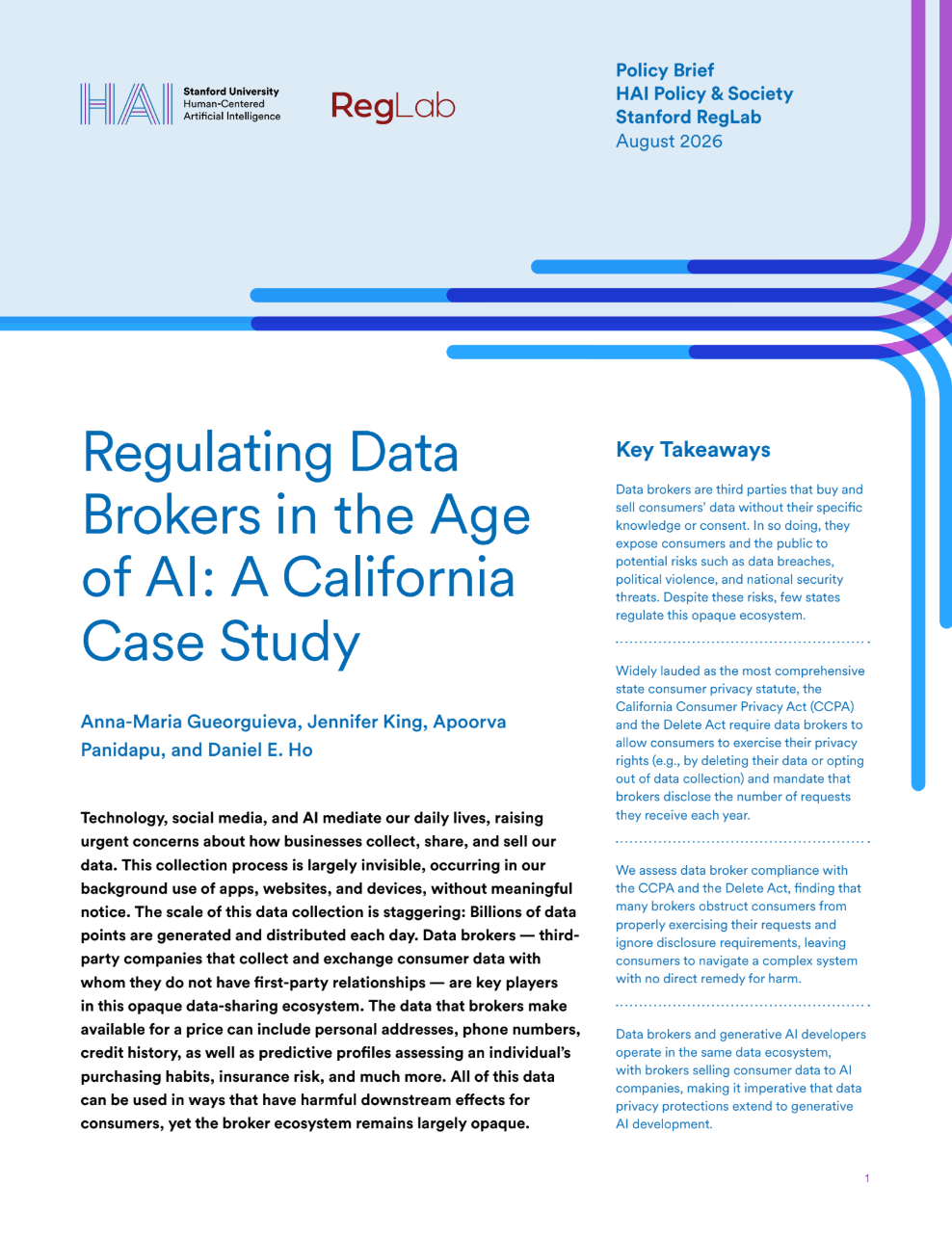
This brief assesses data broker compliance with California privacy laws and calls for more stringent consumer protections.
This brief highlights the emergence of world models and outlines a first-of-its-kind governance and policy agenda for the technology.
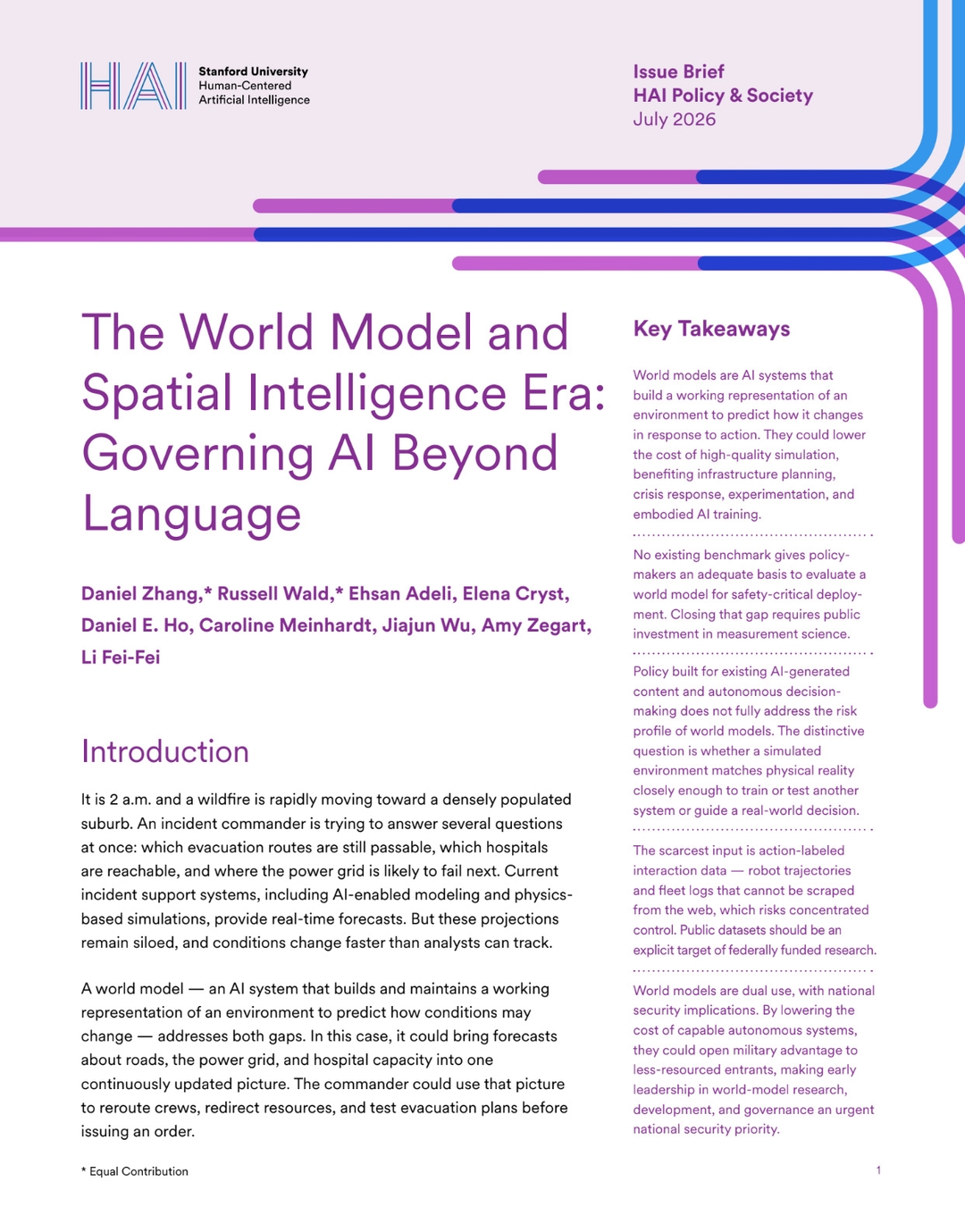
This brief highlights the emergence of world models and outlines a first-of-its-kind governance and policy agenda for the technology.