The Commercial Landscape of AI Sovereignty Offerings
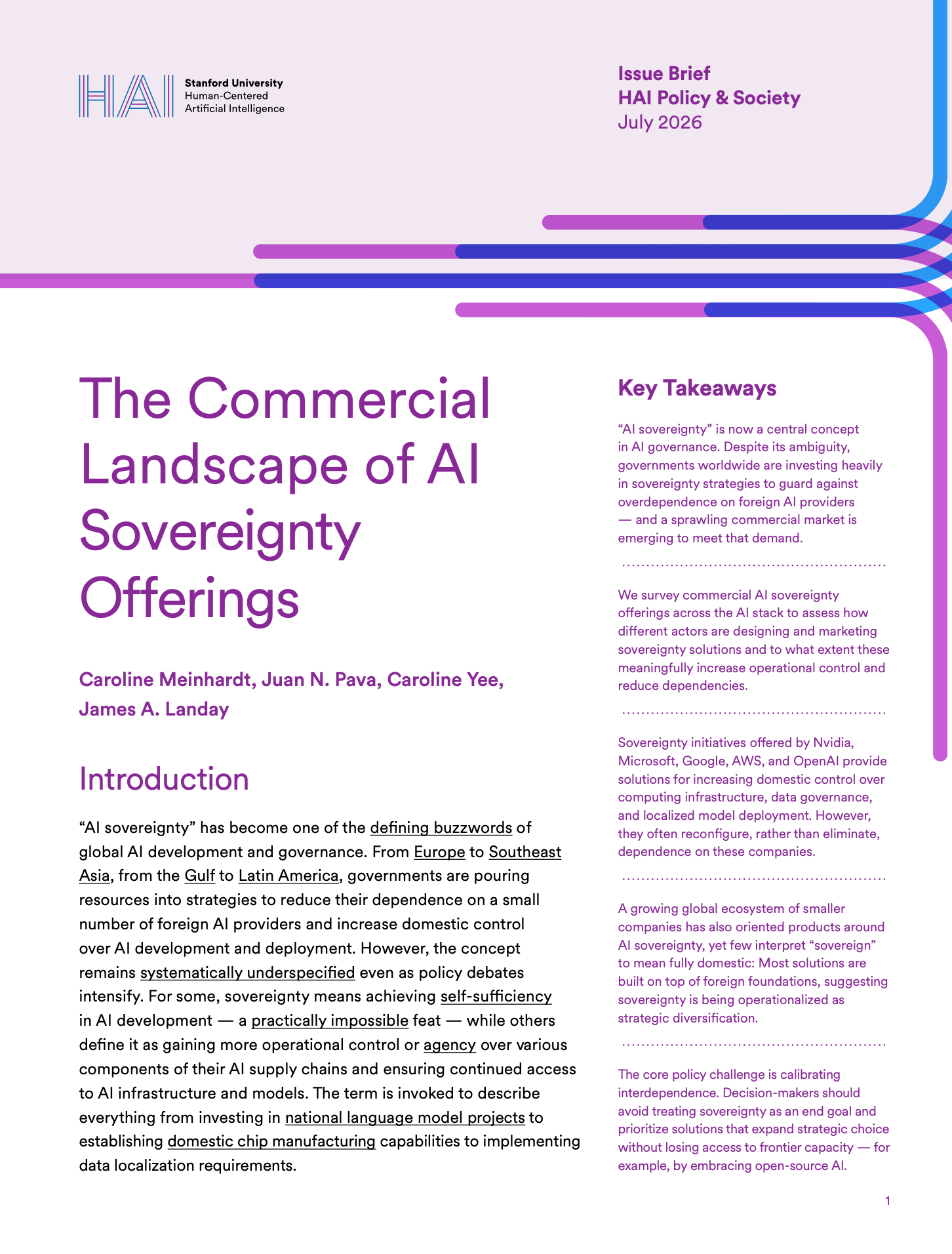
This brief surveys the commercial AI sovereignty market and argues that policymakers should focus on calibrating interdependence rather than pursuing full self-sufficiency.
Key Takeaways
“AI sovereignty” is now a central concept in AI governance. Despite its ambiguity, governments worldwide are investing heavily in sovereignty strategies to guard against overdependence on foreign AI providers — and a sprawling commercial market is emerging to meet that demand.
We survey commercial AI sovereignty offerings across the AI stack to assess how different actors are designing and marketing sovereignty solutions and to what extent these meaningfully increase operational control and reduce dependencies.
Sovereignty initiatives offered by Nvidia, Microsoft, Google, AWS, and OpenAI provide solutions for increasing domestic control over computing infrastructure, data governance, and localized model deployment. However, they often reconfigure, rather than eliminate, dependence on these companies.
A growing global ecosystem of smaller companies has also oriented products around AI sovereignty, yet few interpret “sovereign” to mean fully domestic: Most solutions are built on top of foreign foundations, suggesting sovereignty is being operationalized as strategic diversification.
The core policy challenge is calibrating interdependence. Decision-makers should avoid treating sovereignty as an end goal and prioritize solutions that expand strategic choice without losing access to frontier capacity — for example, by embracing open-source AI.
Introduction
“AI sovereignty” has become one of the defining buzzwords of global AI development and governance. From Europe to Southeast Asia, from the Gulf to Latin America, governments are pouring resources into strategies to reduce their dependence on a small number of foreign AI providers and increase domestic control over AI development and deployment. However, the concept remains systematically underspecified even as policy debates intensify. For some, sovereignty means achieving self-sufficiency in AI development — a practically impossible feat — while others define it as gaining more operational control or agency over various components of their AI supply chains and ensuring continued access to AI infrastructure and models. The term is invoked to describe everything from investing in national language model projects to establishing domestic chip manufacturing capabilities to implementing data localization requirements.
Commercial actors have stepped into this conceptual morass. Alongside the policy debates, a sprawling market has taken shape in which private companies around the world are actively selling sovereign AI solutions. U.S. Big Tech is adapting its products and services for government procurement around the world, and smaller companies and startups are developing tailor-made solutions primarily for their home countries. The language of resilience and independence from foreign control now appears on company websites, investor decks, and partnership announcements from companies operating across the AI tech stack. The commercialization of sovereignty rhetoric has moved fast, and the landscape of offerings has become varied and difficult to parse. Whether these offerings deliver on their promises, or whether they simply rebrand existing dependencies to meet the moment, is a question that has increasingly been raised but has not been examined systematically.
This brief aims to clarify that landscape. We survey a range of commercial AI sovereignty offerings by both U.S. Big Tech and smaller organizations in the global AI ecosystem to identify geographic patterns and trends in the types of solutions emerging across the AI technology stack. We examine to what extent these offerings genuinely provide customers with greater agency or meaningfully reduce AI dependencies, and to what extent they may simply reconfigure or even entrench those dependencies elsewhere. In doing so, we aim to provide a more concrete understanding of the global commercial AI sovereignty landscape and add empirical grounding to what remains a largely fragmented and underspecified policy debate. We conclude with recommendations for policymakers and executives navigating this space.
Our review of commercial sovereign AI offerings demonstrates that pursuing sovereignty isn’t a zero-sum game. Instead, AI sovereignty should be understood as a state’s capacity to act deliberately and make independent decisions concerning the development, deployment, and governance of AI systems that fall along a spectrum of interdependent arrangements. When considering purchasing corporate AI sovereignty solutions and forming partnerships, decision-makers should prioritize expanding strategic choice without losing access to frontier capacity.
Related Publications
Designing Loyalty: AI Agents and Conflicts of Interest

This brief examines the conflict-of-interest risks posed by AI agents and calls for imposing a duty of loyalty on developers and deployers.
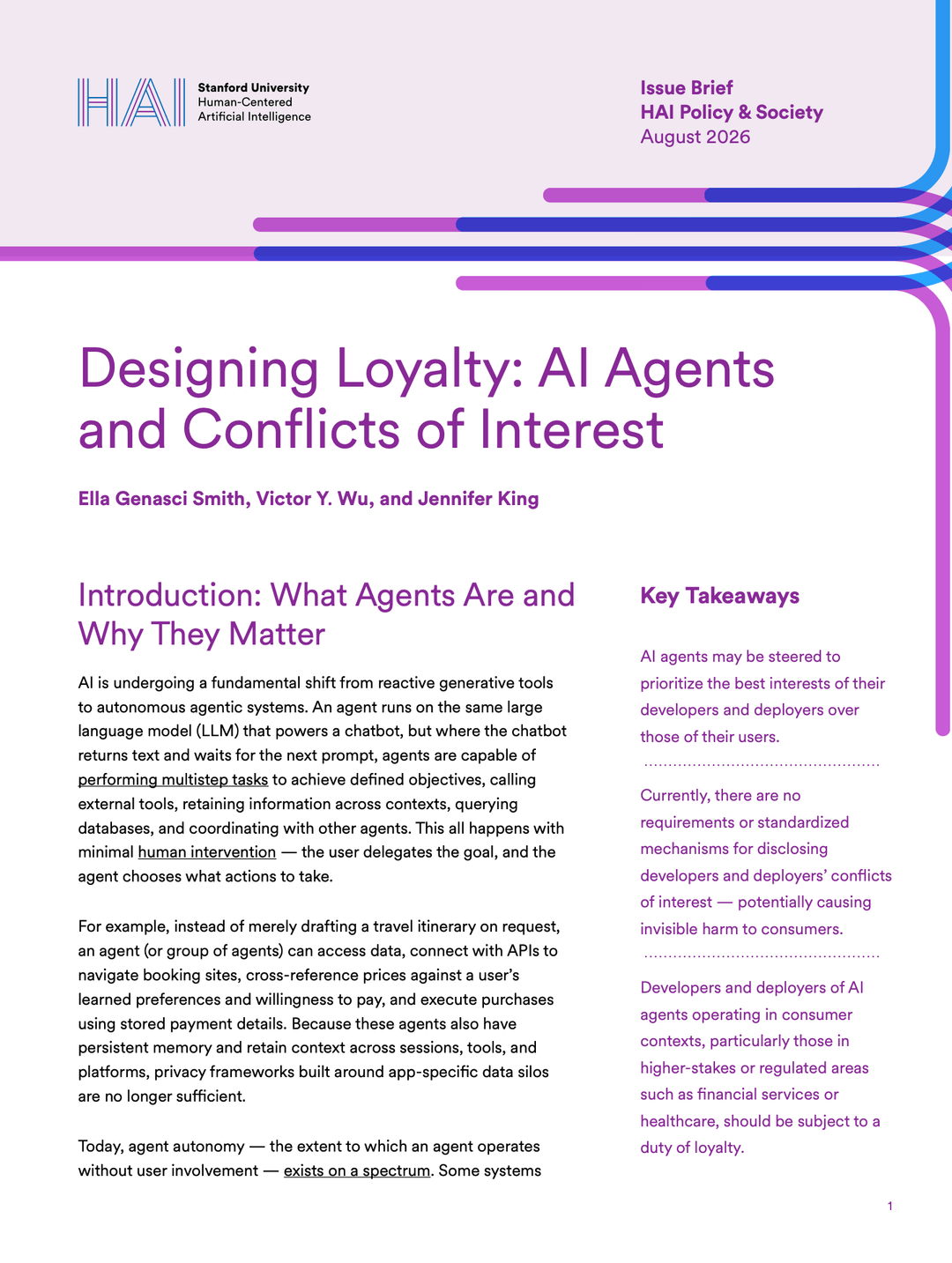
This brief examines the conflict-of-interest risks posed by AI agents and calls for imposing a duty of loyalty on developers and deployers.
This brief highlights the emergence of world models and outlines a first-of-its-kind governance and policy agenda for the technology.
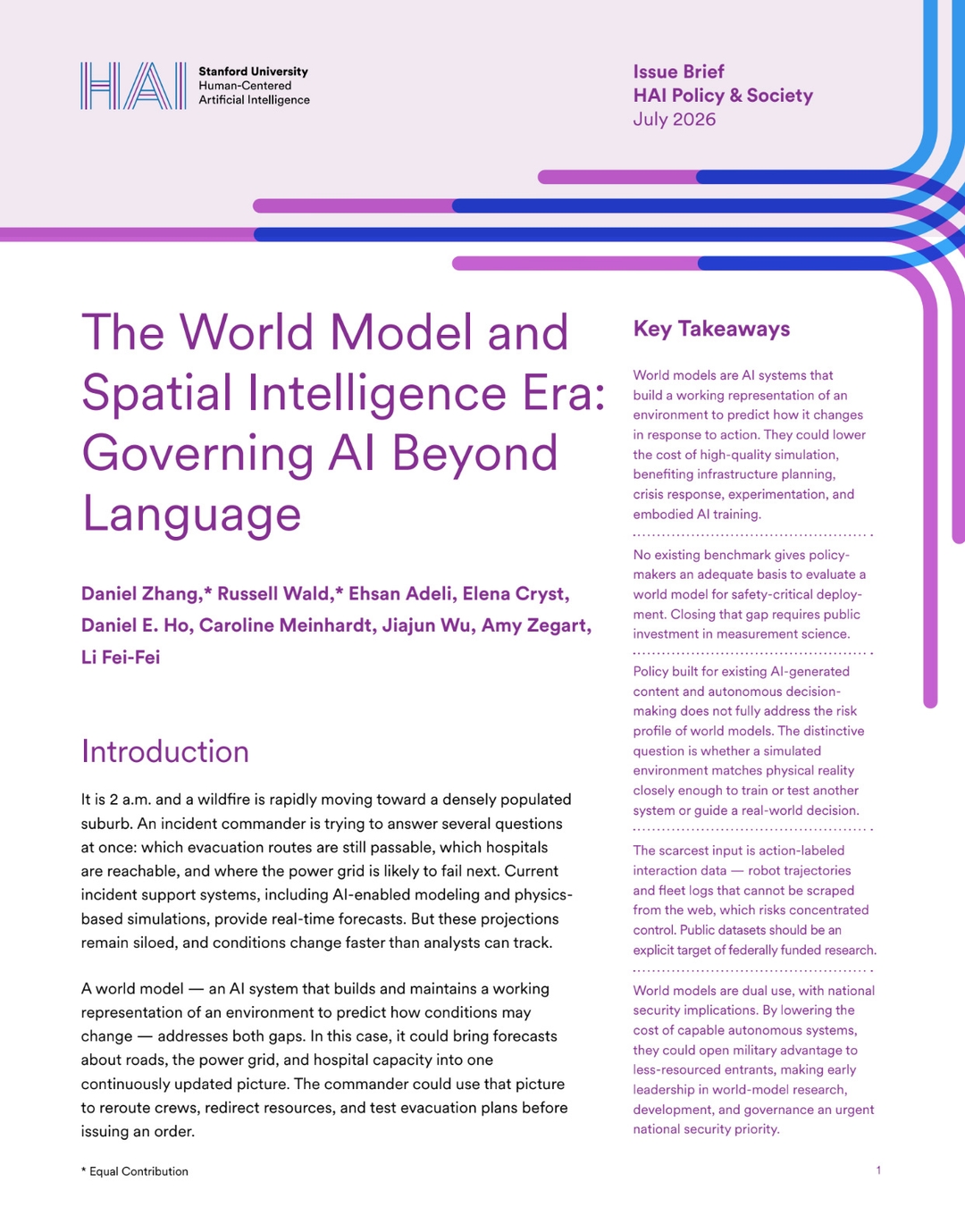
This brief highlights the emergence of world models and outlines a first-of-its-kind governance and policy agenda for the technology.
How Can AI Support Language Digitization and Digital Inclusion?
This white paper analyzes the varying ways AI tools can advance language digitization work, and provides recommendations for responsibly realizing the potential of AI in supporting the digital inclusion of digitally disadvantaged languages.
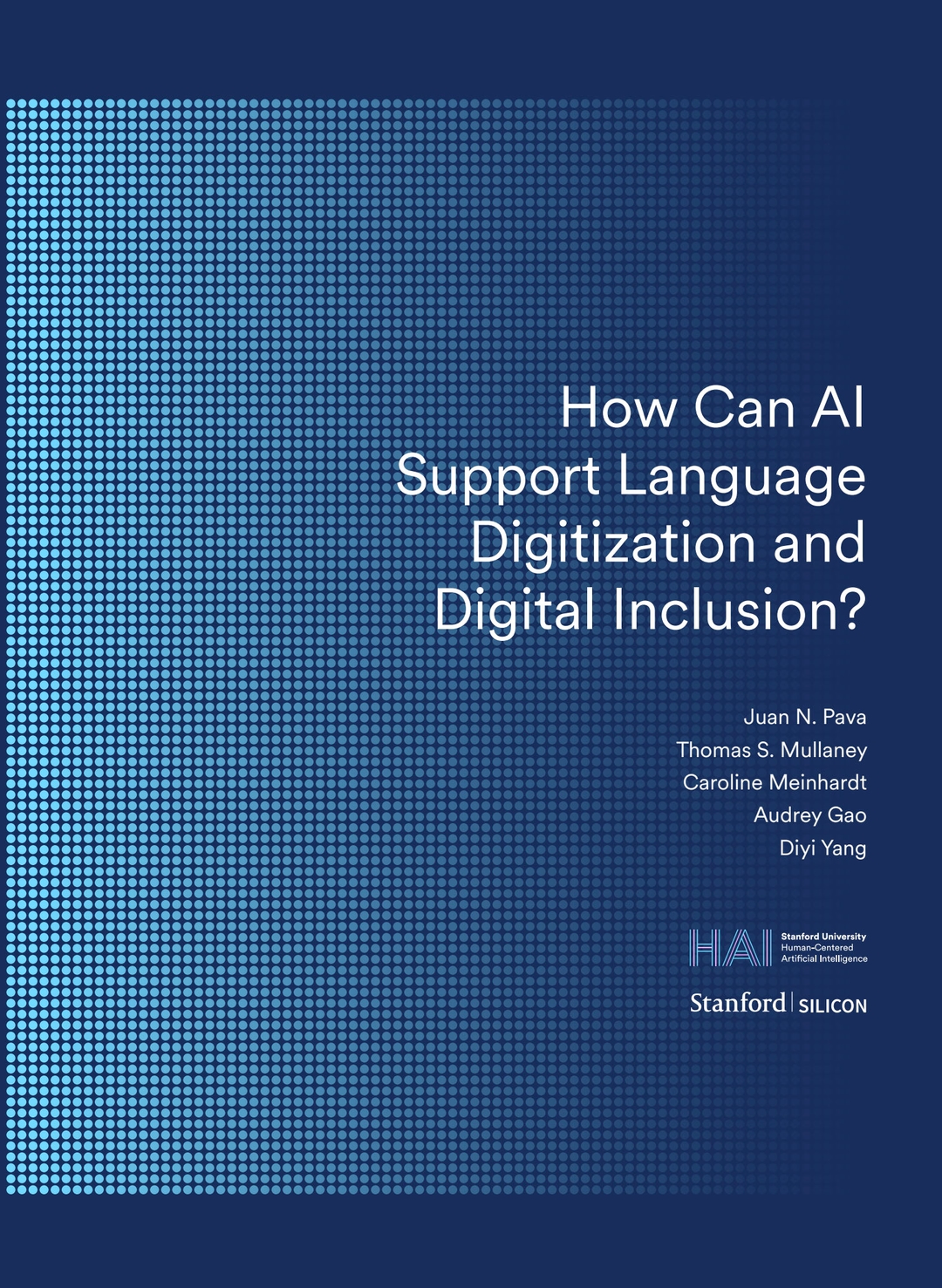
This white paper analyzes the varying ways AI tools can advance language digitization work, and provides recommendations for responsibly realizing the potential of AI in supporting the digital inclusion of digitally disadvantaged languages.
Beyond DeepSeek: China's Diverse Open-Weight AI Ecosystem and Its Policy Implications
Almost one year after the “DeepSeek moment,” this brief analyzes China’s diverse open-model ecosystem and examines the policy implications of their widespread global diffusion.
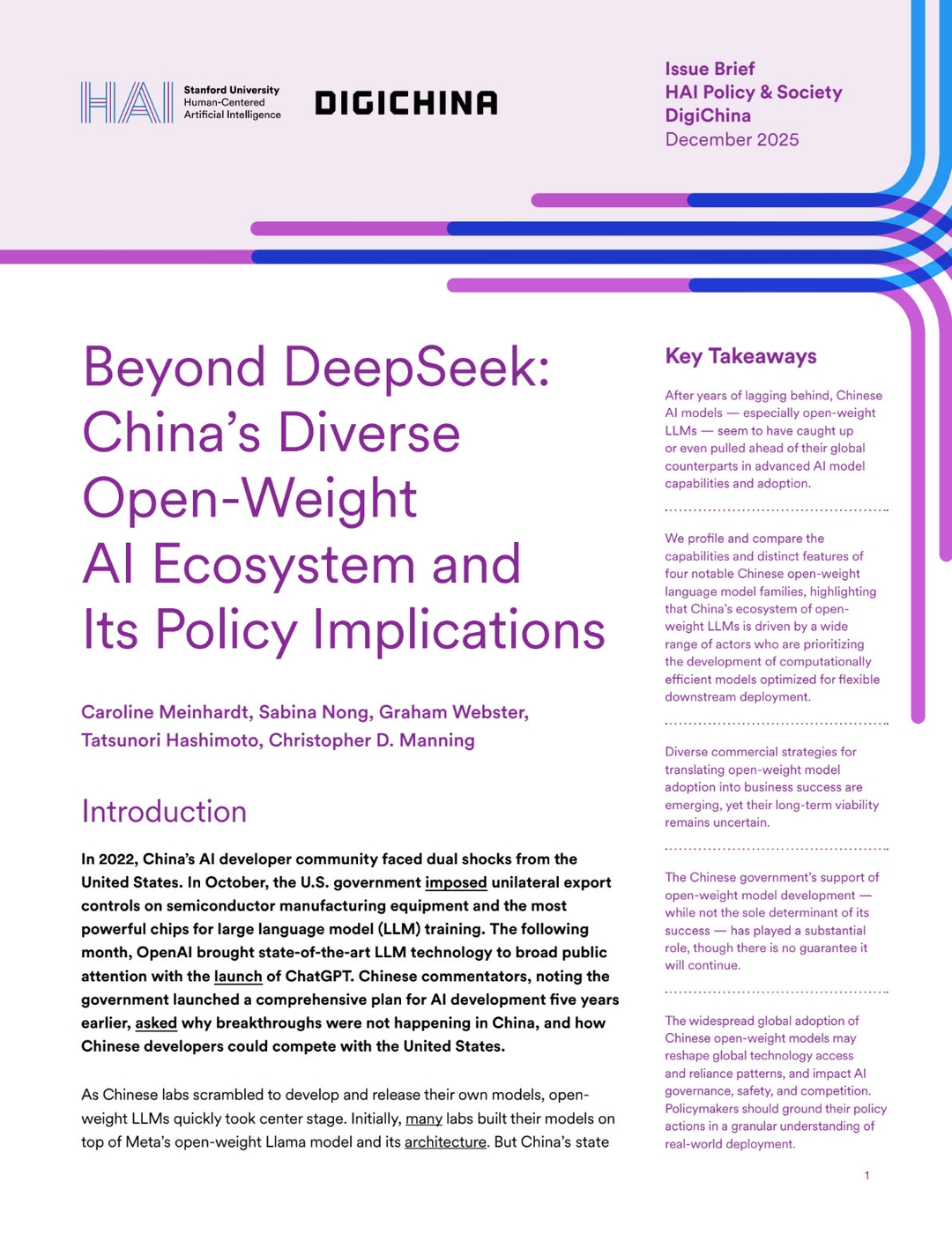
Almost one year after the “DeepSeek moment,” this brief analyzes China’s diverse open-model ecosystem and examines the policy implications of their widespread global diffusion.