All Work Published on Regulation, Policy, Governance
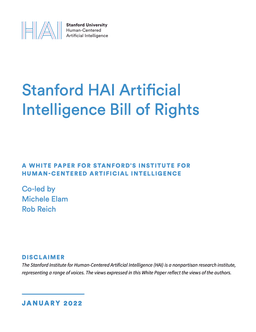
Stanford scholars respond to a federal RFI regarding public and private sector uses of biometric technologies, proposing six principles for the responsible use of biometrics and AI.
Stanford scholars respond to a federal RFI regarding public and private sector uses of biometric technologies, proposing six principles for the responsible use of biometrics and AI.
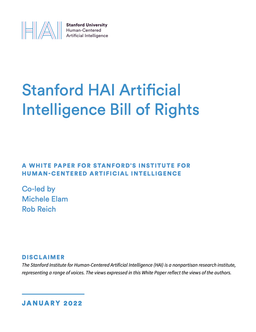
Biden-era AI safety promises aren't holding up, and Apple's the weakest link
Rishi Bommasani, Society Lead at Stanford Center for Research on Foundation Models, speaks about a new analysis: "Do AI Companies Make Good on Voluntary Commitments to the White House?"
Rishi Bommasani, Society Lead at Stanford Center for Research on Foundation Models, speaks about a new analysis: "Do AI Companies Make Good on Voluntary Commitments to the White House?"
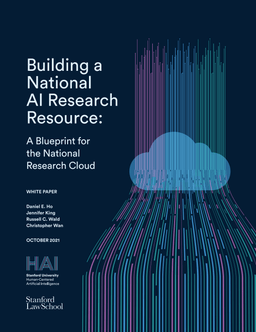
Building a National AI Research Resource: A Blueprint for the National Research Cloud
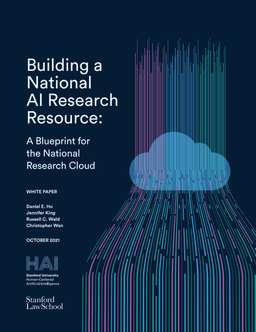
This white paper proposes a blueprint for a National Research Cloud that would enable much greater access to—and in that sense, democratize—forms of AI and AI research that have increased in computational demands.
This white paper proposes a blueprint for a National Research Cloud that would enable much greater access to—and in that sense, democratize—forms of AI and AI research that have increased in computational demands.
Erik Brynjolfsson, HAI Senior Fellow and Director of the Stanford Digital Economy Lab, speaks about AI's policymakers' roles in preparing for AI impacts on the labor markets.
Erik Brynjolfsson, HAI Senior Fellow and Director of the Stanford Digital Economy Lab, speaks about AI's policymakers' roles in preparing for AI impacts on the labor markets.

This explainer summarizes the European Commission's proposal to regulate “high-risk” AI use cases and briefly discusses its implications.
This explainer summarizes the European Commission's proposal to regulate “high-risk” AI use cases and briefly discusses its implications.


Experts from Stanford HAI and top universities urge policymakers to prioritize scientific understanding to govern frontier AI.
Experts from Stanford HAI and top universities urge policymakers to prioritize scientific understanding to govern frontier AI.