Upcoming Events
Alexandr Lenk & Arvind Karunakaran | Industry Conversation with Instacart
This seminar pairs a case study of AI diffusion with an organizational approach to technological changes in the workplace.
Alexandr Lenk & Arvind Karunakaran | Industry Conversation with Instacart
This seminar pairs a case study of AI diffusion with an organizational approach to technological changes in the workplace.
Marlowe | AI + Data for Science with Stephen Baccus
Sessions run Wednesdays from 4:30–5:30 PM in CoDa E160. Each session features a different Stanford speaker; talk titles are announced by the organizers.
Sessions run Wednesdays from 4:30–5:30 PM in CoDa E160. Each session features a different Stanford speaker; talk titles are announced by the organizers.
World Development Report 2026: The Promise of Artificial Intelligence
World Development Report 2026: The Promise of Artificial Intelligence
Daniel Zhang, Caroline Meinhardt, Jiajun Wu, and Russell Wald | The World Model and Spatial Intelligence Era: Governing AI Beyond Language
As AI moves beyond language into systems that can perceive, understand, and act in the physical world, a new frontier is emerging: world models—AI systems that build and maintain working representations of real environments to predict how they change in response to action.
Daniel Zhang, Caroline Meinhardt, Jiajun Wu, and Russell Wald | The World Model and Spatial Intelligence Era: Governing AI Beyond Language
As AI moves beyond language into systems that can perceive, understand, and act in the physical world, a new frontier is emerging: world models—AI systems that build and maintain working representations of real environments to predict how they change in response to action.
Marlowe | AI + Data for Science with Gordon Wetzstein
Sessions run Wednesdays from 4:30–5:30 PM in CoDa E160. Each session features a different Stanford speaker; talk titles are announced by the organizers.
Sessions run Wednesdays from 4:30–5:30 PM in CoDa E160. Each session features a different Stanford speaker; talk titles are announced by the organizers.
Anastasios Angelopoulos | Measuring AI in the Real World
This seminar co-hosted with the AI Measurement Science Center (AIMS) invites speakers to discuss academic work in AI evaluation and measurement science.
Anastasios Angelopoulos | Measuring AI in the Real World
This seminar co-hosted with the AI Measurement Science Center (AIMS) invites speakers to discuss academic work in AI evaluation and measurement science.
Tim de Silva | AI Financial Advice: Supply, Demand, and Life Cycle Implications
Tim de Silva | AI Financial Advice: Supply, Demand, and Life Cycle Implications
Marlowe | AI + Data for Science with Olivier Gevaert
Sessions run Wednesdays from 4:30–5:30 PM in CoDa E160. Each session features a different Stanford speaker; talk titles are announced by the organizers.
Sessions run Wednesdays from 4:30–5:30 PM in CoDa E160. Each session features a different Stanford speaker; talk titles are announced by the organizers.
Marlowe | AI + Data for Science with Curtis Langlotz
Sessions run Wednesdays from 4:30–5:30 PM in CoDa E160. Each session features a different Stanford speaker; talk titles are announced by the organizers.
Sessions run Wednesdays from 4:30–5:30 PM in CoDa E160. Each session features a different Stanford speaker; talk titles are announced by the organizers.
Marlowe | AI + Data for Science with Anshul Kundaje
Sessions run Wednesdays from 4:30–5:30 PM in CoDa E160. Each session features a different Stanford speaker; talk titles are announced by the organizers.
Sessions run Wednesdays from 4:30–5:30 PM in CoDa E160. Each session features a different Stanford speaker; talk titles are announced by the organizers.
Confronting Our AI Future: Hope, Fear, and the Choices Ahead
The rapid acceleration of AI comes with a profound wave of anxiety. Across every sector of society, people are facing unsettling questions about their worth and their place in a shifting world.
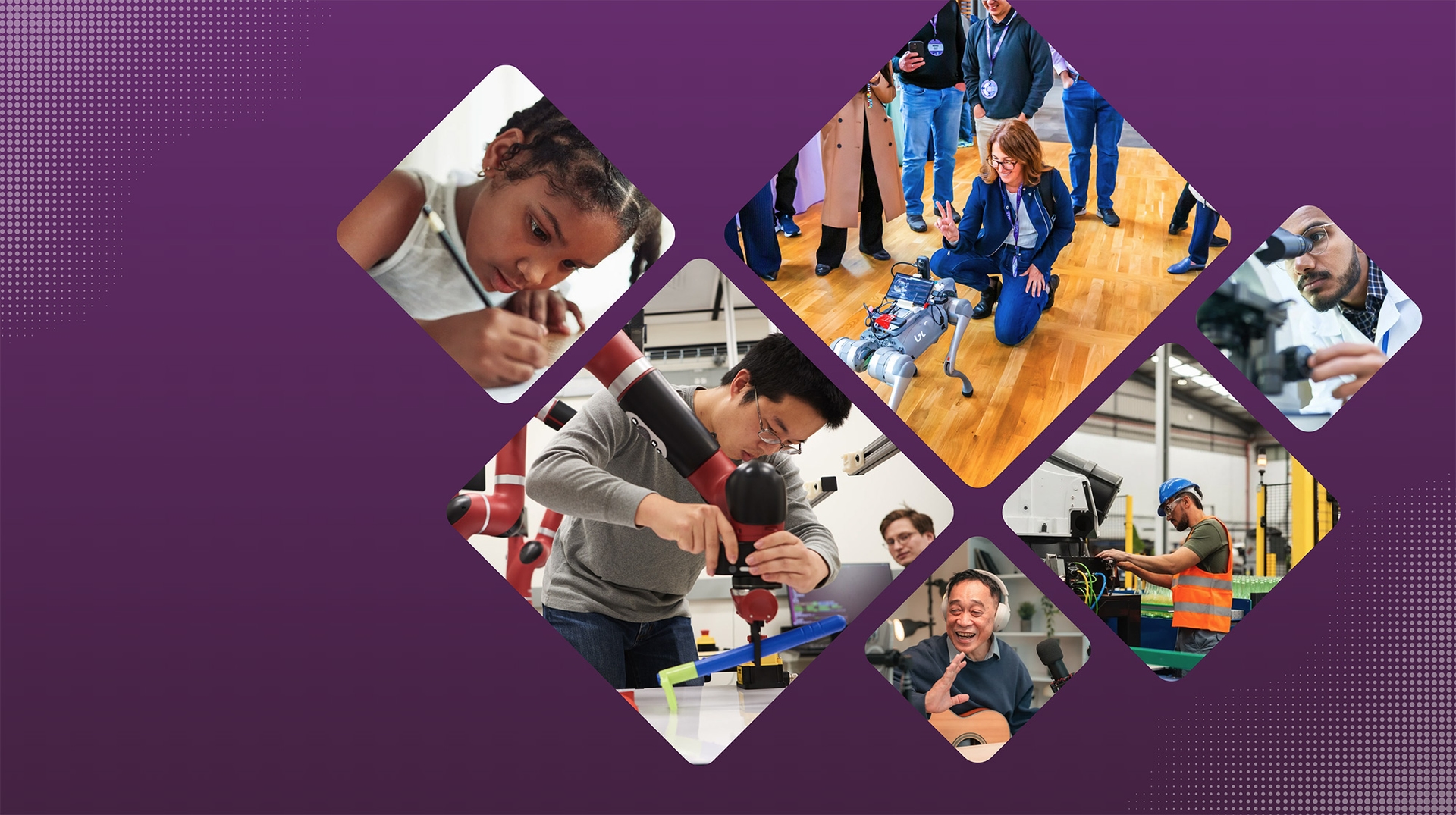
Confronting Our AI Future: Hope, Fear, and the Choices Ahead
The rapid acceleration of AI comes with a profound wave of anxiety. Across every sector of society, people are facing unsettling questions about their worth and their place in a shifting world.
Marlowe | AI + Data for Science with Dan Yamins
Sessions run Wednesdays from 4:30–5:30 PM in CoDa E160. Each session features a different Stanford speaker; talk titles are announced by the organizers.
Marlowe | AI + Data for Science with Dan Yamins
Sessions run Wednesdays from 4:30–5:30 PM in CoDa E160. Each session features a different Stanford speaker; talk titles are announced by the organizers.
Marcos Santiago Rojas Pino & Thomas Caruso | Building an International AI Platform for Health Professions Education and the Learning Sciences
Clinical Mind AI is a Stanford-developed, international collaborative platform designed to strengthen clinical reasoning education through AI-simulated patient encounters across health professions.
Marcos Santiago Rojas Pino & Thomas Caruso | Building an International AI Platform for Health Professions Education and the Learning Sciences
Clinical Mind AI is a Stanford-developed, international collaborative platform designed to strengthen clinical reasoning education through AI-simulated patient encounters across health professions.
Marlowe | AI + Data for Science with Ruijiang Li
Sessions run Wednesdays from 4:30–5:30 PM in CoDa E160. Each session features a different Stanford speaker; talk titles are announced by the organizers.
Marlowe | AI + Data for Science with Ruijiang Li
Sessions run Wednesdays from 4:30–5:30 PM in CoDa E160. Each session features a different Stanford speaker; talk titles are announced by the organizers.
Marlowe | AI + Data for Science with Mohsen Bayati
Sessions run Wednesdays from 4:30–5:30 PM in CoDa E160. Each session features a different Stanford speaker; talk titles are announced by the organizers.
Sessions run Wednesdays from 4:30–5:30 PM in CoDa E160. Each session features a different Stanford speaker; talk titles are announced by the organizers.
AI100 | AI Goes Mainstream: The Scaling Era and the Rise of Generative AI
This talk will cover key insights from the third AI100 report, AI Goes Mainstream: The Scaling Era and the Rise of Generative AI, set for release in October 2026. The report was commissioned by the AI100 standing committee and led by study panel chair Michael Wooldridge.
AI100 | AI Goes Mainstream: The Scaling Era and the Rise of Generative AI
This talk will cover key insights from the third AI100 report, AI Goes Mainstream: The Scaling Era and the Rise of Generative AI, set for release in October 2026. The report was commissioned by the AI100 standing committee and led by study panel chair Michael Wooldridge.
Marlowe | AI + Data for Science with Andreas Tolias
Sessions run Wednesdays from 4:30–5:30 PM in CoDa E160. Each session features a different Stanford speaker; talk titles are announced by the organizers.
Sessions run Wednesdays from 4:30–5:30 PM in CoDa E160. Each session features a different Stanford speaker; talk titles are announced by the organizers.
Marlowe | AI + Data for Science with Leonidas Guibas
Sessions run Wednesdays from 4:30–5:30 PM in CoDa E160. Each session features a different Stanford speaker; talk titles are announced by the organizers.
Sessions run Wednesdays from 4:30–5:30 PM in CoDa E160. Each session features a different Stanford speaker; talk titles are announced by the organizers.
Angèle Christin & Hannah Zeavin | Gurus, Hucksters, Entertainers: How Influencers Reshaped Social Media
Please join us for an illuminating investigation of the complex work of social media content creators—their lives, conflicts, and controversies.
Angèle Christin & Hannah Zeavin | Gurus, Hucksters, Entertainers: How Influencers Reshaped Social Media
Please join us for an illuminating investigation of the complex work of social media content creators—their lives, conflicts, and controversies.
Featured Videos
Hear from speakers and attendees at recent Stanford HAI events across research, policy, and education.
Previous Events at HAI
2024 AI Index Report D.C. Launch
The Hoover Institution and the Stanford Institute for Human-Centered Artificial Intelligence (HAI) launched the 2024 AI Index Report, that was released on April 15, 2024.
2024 AI Index Report D.C. Launch
The Hoover Institution and the Stanford Institute for Human-Centered Artificial Intelligence (HAI) launched the 2024 AI Index Report, that was released on April 15, 2024.
AI+Policy Symposium: A Global Stocktaking
Concerns over the societal impacts of generative AI are prompting a flurry of regulatory and policy responses globally, with initiatives underway in the EU, China, Brazil, Japan, Singapore, the UK, and the US, as well as through multilateral organizations such as the UN, OECD, the African Union, and ASEAN. Proposals range widely, reflecting competing political philosophies.
AI+Policy Symposium: A Global Stocktaking
Concerns over the societal impacts of generative AI are prompting a flurry of regulatory and policy responses globally, with initiatives underway in the EU, China, Brazil, Japan, Singapore, the UK, and the US, as well as through multilateral organizations such as the UN, OECD, the African Union, and ASEAN. Proposals range widely, reflecting competing political philosophies.
Kerry McInerney and Eleanor Drage | The Good Robot: Why AI Needs Feminism
What is good technology? Is it even possible? And how can feminism help us work toward it?
Kerry McInerney and Eleanor Drage | The Good Robot: Why AI Needs Feminism
What is good technology? Is it even possible? And how can feminism help us work toward it?
Thermal Satellite Imagery for the Detection and Monitoring of Nuclear Weapons: Early Approaches for Automating Imagery Analysis
Much of what we know today about global events - like Russia's invasion of Ukraine or North Korea’s advancement towards nuclear capability - has come from satellite sensors that collect optical images of the earth's surface.
Thermal Satellite Imagery for the Detection and Monitoring of Nuclear Weapons: Early Approaches for Automating Imagery Analysis
Much of what we know today about global events - like Russia's invasion of Ukraine or North Korea’s advancement towards nuclear capability - has come from satellite sensors that collect optical images of the earth's surface.
OffScript with Ge Wang and Vanessa Parli | Episode 4: What Do We (Really) Want from AI in Early Childhood Education?
Welcome to Stanford Human-Centered AI Vodcast, where we don't sweep anything under the rug; where we question everything, starting with ourselves.
OffScript with Ge Wang and Vanessa Parli | Episode 4: What Do We (Really) Want from AI in Early Childhood Education?
Welcome to Stanford Human-Centered AI Vodcast, where we don't sweep anything under the rug; where we question everything, starting with ourselves.
Women in Data Science Worldwide, Stanford Conference
Mark Russinovich | Generative AI in the Cloud: Inside Microsoft AI Innovation
In this seminar, Mark Russinovich, Azure CTO and Technical Fellow, gave an under-the-hood look at Microsoft’s AI architecture, including the large-scale supercomputers that train foundational models and the infrastructure that efficiently serves small and large pretrained and fine-tuned models.
Mark Russinovich | Generative AI in the Cloud: Inside Microsoft AI Innovation
In this seminar, Mark Russinovich, Azure CTO and Technical Fellow, gave an under-the-hood look at Microsoft’s AI architecture, including the large-scale supercomputers that train foundational models and the infrastructure that efficiently serves small and large pretrained and fine-tuned models.
“AI For Good” Isn’t Good Enough: A Call for Human-Centered AI
In his talk, "AI For Good” Isn’t Good Enough: A Call for Human-Centered AI", Professor James Landay elaborates on his argument for an authentic Human-Centered AI.
“AI For Good” Isn’t Good Enough: A Call for Human-Centered AI
In his talk, "AI For Good” Isn’t Good Enough: A Call for Human-Centered AI", Professor James Landay elaborates on his argument for an authentic Human-Centered AI.
Judith Fan | Cognitive Tools for Uncovering Useful Abstractions
In the 17th century, the Cartesian coordinate system exposed the unity between algebra and geometry, accelerating the development of the math that took humans to the moon.
Judith Fan | Cognitive Tools for Uncovering Useful Abstractions
In the 17th century, the Cartesian coordinate system exposed the unity between algebra and geometry, accelerating the development of the math that took humans to the moon.