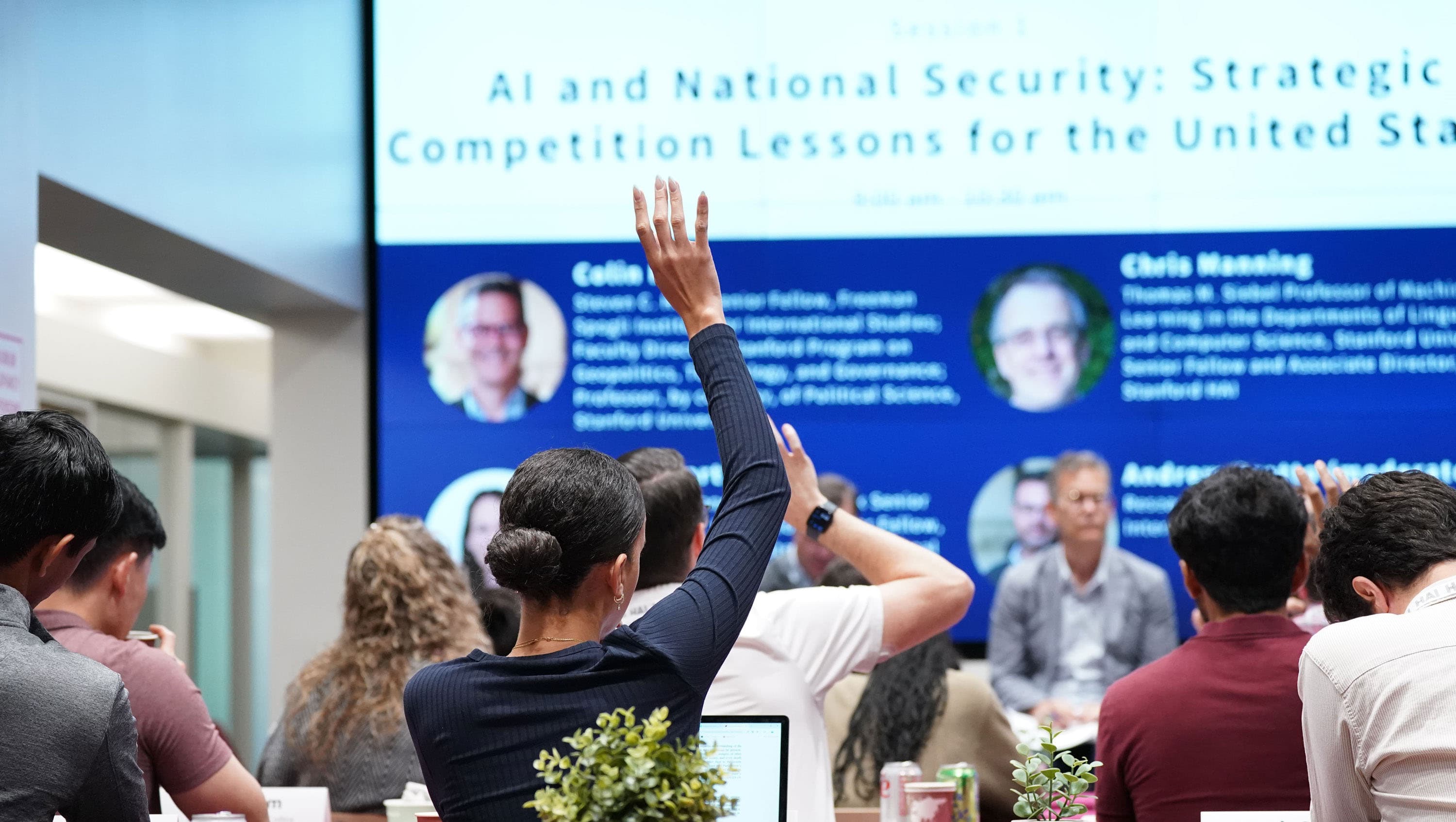
Global AI competition is central to today’s geopolitical debates. Rapid advancement in AI capabilities and adoption present both unprecedented opportunities and risks to international stability and governance. Yet the scholarship needed to navigate this new terrain is dangerously fragmented. Stanford HAI and the Hoover Institution’s Technology Policy Accelerator (TPA) are advancing an ambitious research agenda focused on the most important geopolitical policy challenges impacted by AI.





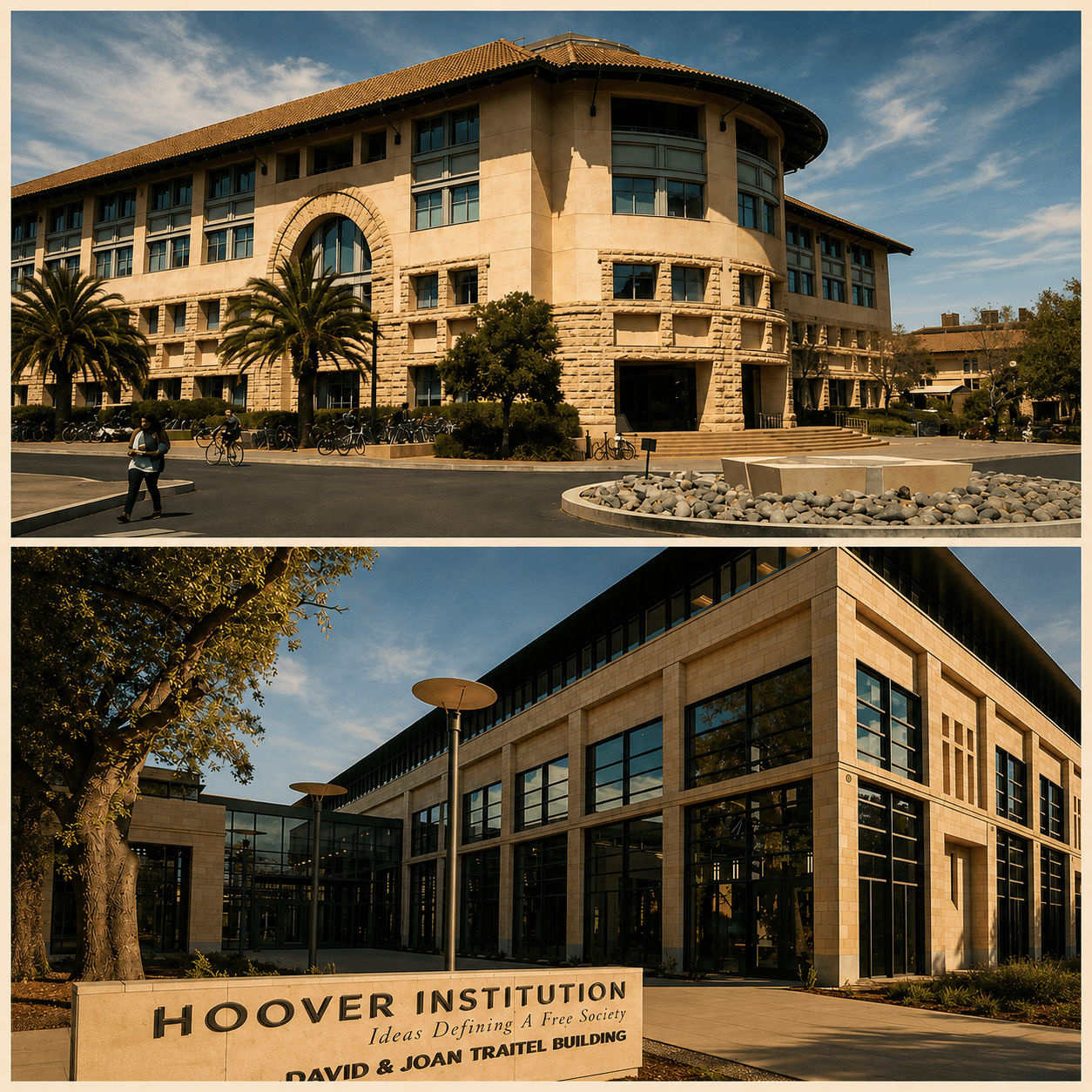
The Working Group on AI and Geopolitics is a multidisciplinary group of Stanford faculty and scholars that work together to advance research focused on issues at the intersection of AI and geopolitics. Co-sponsored by HAI and the Hoover Institution’s Technology Policy Accelerator (TPA), and co-chaired by political scientist Amy Zegart and computer scientist Chris Manning, the group brings together political scientists and national security experts versed in the geopolitics of AI alongside computer scientists with technical knowledge of the cutting edge of AI development.
By funding novel research and convening timely discussions, the group aims to expand the evidence base and develop orienting principles about the most important geopolitical policy challenges impacted by AI. To date, the group has awarded $300,000 in funding to Stanford research teams examining AI’s role in nuclear proliferation, U.S.-China competition, and political influence.

Get the latest news, advances in research, policy work, and education program updates from HAI in your inbox weekly.
Sign Up For Latest News


Stanford HAI and the Hoover Institution’s Technology Policy Accelerator back projects examining AI's role in detecting nuclear proliferation, U.S.-China competition, and political influence.

Governments worldwide are racing to control their AI futures, but unclear definitions hinder real policy progress.

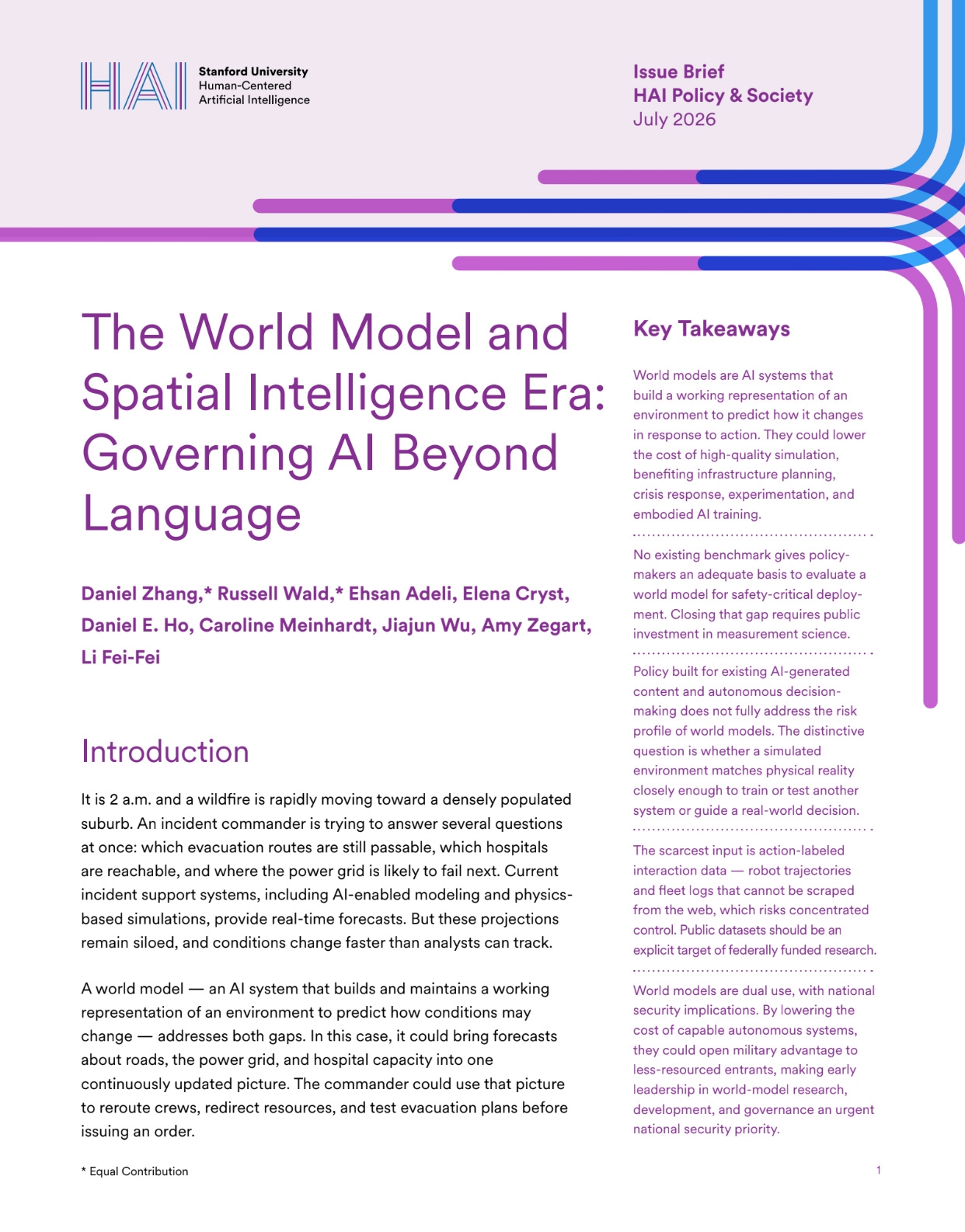
This brief highlights the emergence of world models and outlines a first-of-its-kind governance and policy agenda for the technology.

This brief surveys the commercial AI sovereignty market and argues that policymakers should focus on calibrating interdependence rather than pursuing full self-sufficiency.

Almost one year after the “DeepSeek moment,” this brief analyzes China’s diverse open-model ecosystem and examines the policy implications of their widespread global diffusion.

This brief presents an analysis of Chinese AI startup DeepSeek’s talent base and calls for U.S. policymakers to reinvest in competing to attract and retain global AI talent.

This brief presents the results of a wargame simulation that aims to evaluate the escalation risks of large language models (LLMs) in high-stakes military and diplomatic decision-making.