Geopolitics and International Security
The 2026 US Talent Report: Benchmarking America’s STEM Pipeline Amid the Great Talent Competition
This report assesses America's ability to develop, attract, and retain STEM talent and warns that its advantages over China are narrowing rapidly.
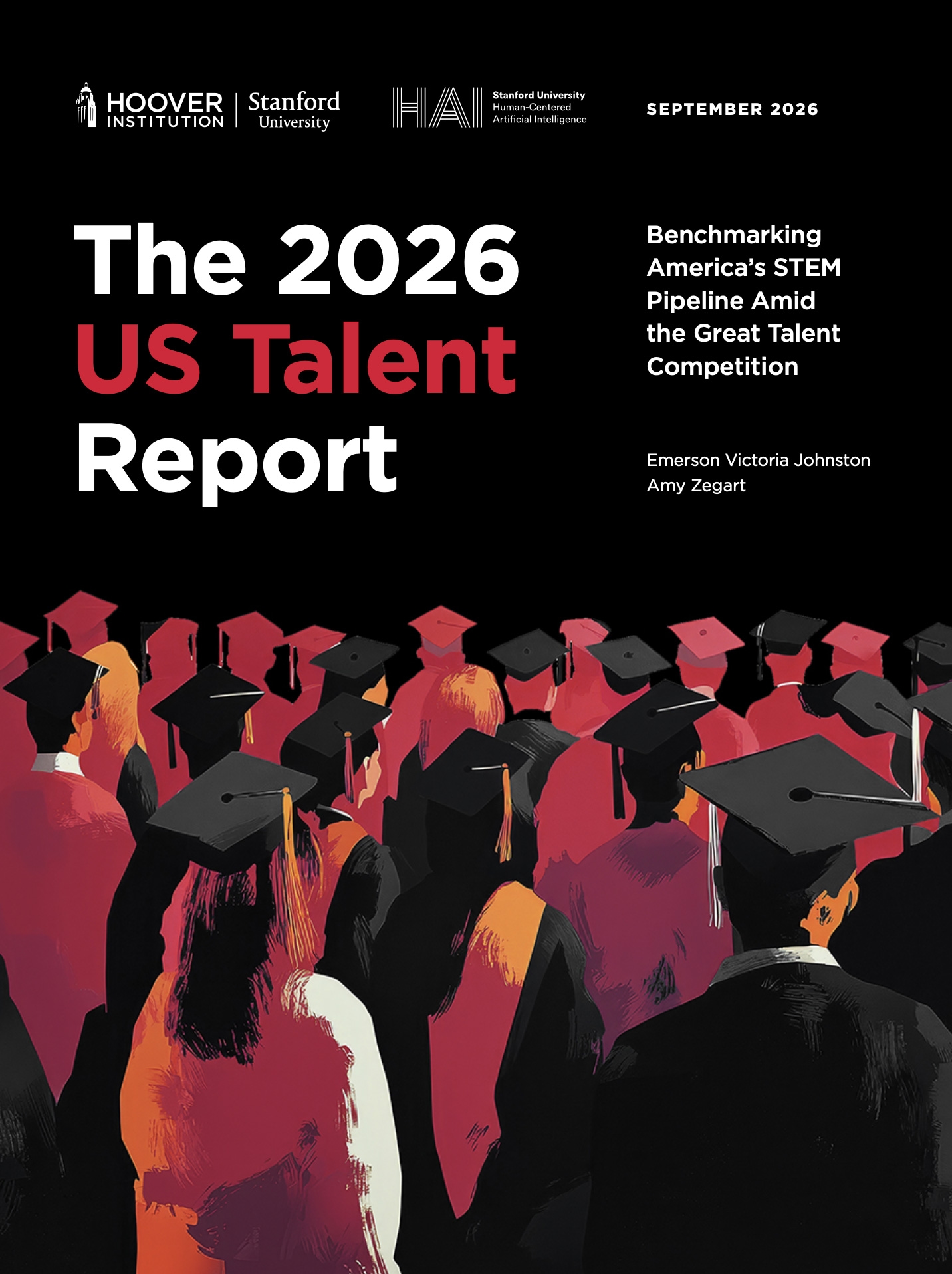
This report assesses America's ability to develop, attract, and retain STEM talent and warns that its advantages over China are narrowing rapidly.
The Commercial Landscape of AI Sovereignty Offerings
This brief surveys the commercial AI sovereignty market and argues that policymakers should focus on calibrating interdependence rather than pursuing full self-sufficiency.
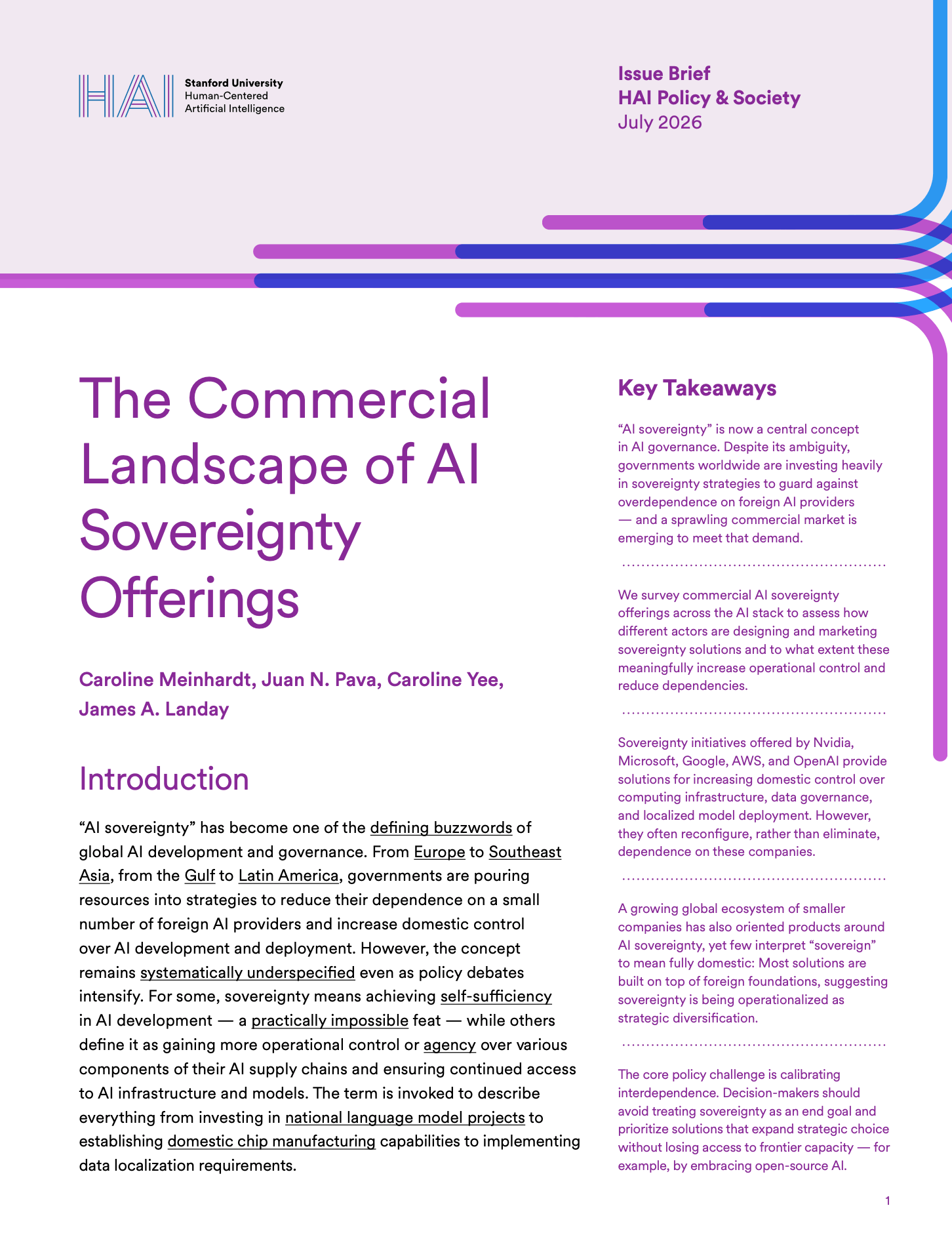
This brief surveys the commercial AI sovereignty market and argues that policymakers should focus on calibrating interdependence rather than pursuing full self-sufficiency.
Beyond DeepSeek: China's Diverse Open-Weight AI Ecosystem and Its Policy Implications
Almost one year after the “DeepSeek moment,” this brief analyzes China’s diverse open-model ecosystem and examines the policy implications of their widespread global diffusion.

Almost one year after the “DeepSeek moment,” this brief analyzes China’s diverse open-model ecosystem and examines the policy implications of their widespread global diffusion.

In this address, presented to the United Nations Security Council meeting on "Maintenance of International Peace and Security," Yejin Choi calls on the global scientific and policy communities to expand the AI frontier for all by pursuing intelligence that is not only powerful, but also accessible, robust, and efficient. She stresses the need to rethink our dependence on massive-scale data and computing resources from the outset, and design methods that do more with less — by building AI that is smaller and serves all communities.

In this address, presented to the United Nations Security Council meeting on "Maintenance of International Peace and Security," Yejin Choi calls on the global scientific and policy communities to expand the AI frontier for all by pursuing intelligence that is not only powerful, but also accessible, robust, and efficient. She stresses the need to rethink our dependence on massive-scale data and computing resources from the outset, and design methods that do more with less — by building AI that is smaller and serves all communities.

This brief presents an analysis of Chinese AI startup DeepSeek’s talent base and calls for U.S. policymakers to reinvest in competing to attract and retain global AI talent.

This brief presents an analysis of Chinese AI startup DeepSeek’s talent base and calls for U.S. policymakers to reinvest in competing to attract and retain global AI talent.

In this address, presented to the United Nations Security Council meeting on "Maintenance of International Peace and Security and Artificial Intelligence," Fei-Fei Li stresses the importance of public sector leadership, global collaboration, and evidence-based policymaking to unlock AI’s potential and ensure its responsible development.
In this address, presented to the United Nations Security Council meeting on "Maintenance of International Peace and Security and Artificial Intelligence," Fei-Fei Li stresses the importance of public sector leadership, global collaboration, and evidence-based policymaking to unlock AI’s potential and ensure its responsible development.
All Work Published on Geopolitics and International Security
Escalation Risks from LLMs in Military and Diplomatic Contexts

This brief presents the results of a wargame simulation that aims to evaluate the escalation risks of large language models (LLMs) in high-stakes military and diplomatic decision-making.
This brief presents the results of a wargame simulation that aims to evaluate the escalation risks of large language models (LLMs) in high-stakes military and diplomatic decision-making.
Enhancing International Cooperation in AI Research: The Case for a Multilateral AI Research Institute

This white paper proposes a Multilateral AI Research Institute (MAIRI) that would provide a venue for force-multiplying AI research and development collaboration among like-minded countries.
This white paper proposes a Multilateral AI Research Institute (MAIRI) that would provide a venue for force-multiplying AI research and development collaboration among like-minded countries.


This brief argues that the U.S. Intelligence Community must swiftly integrate AI to preserve decision-making superiority amid evolving great-power and cyber threats
This brief argues that the U.S. Intelligence Community must swiftly integrate AI to preserve decision-making superiority amid evolving great-power and cyber threats
