Sciences (Social, Health, Biological, Physical)
AI is accelerating discovery in the sciences and fostering interdisciplinary breakthroughs.
Confronting Our AI Future: Hope, Fear, and the Choices Ahead
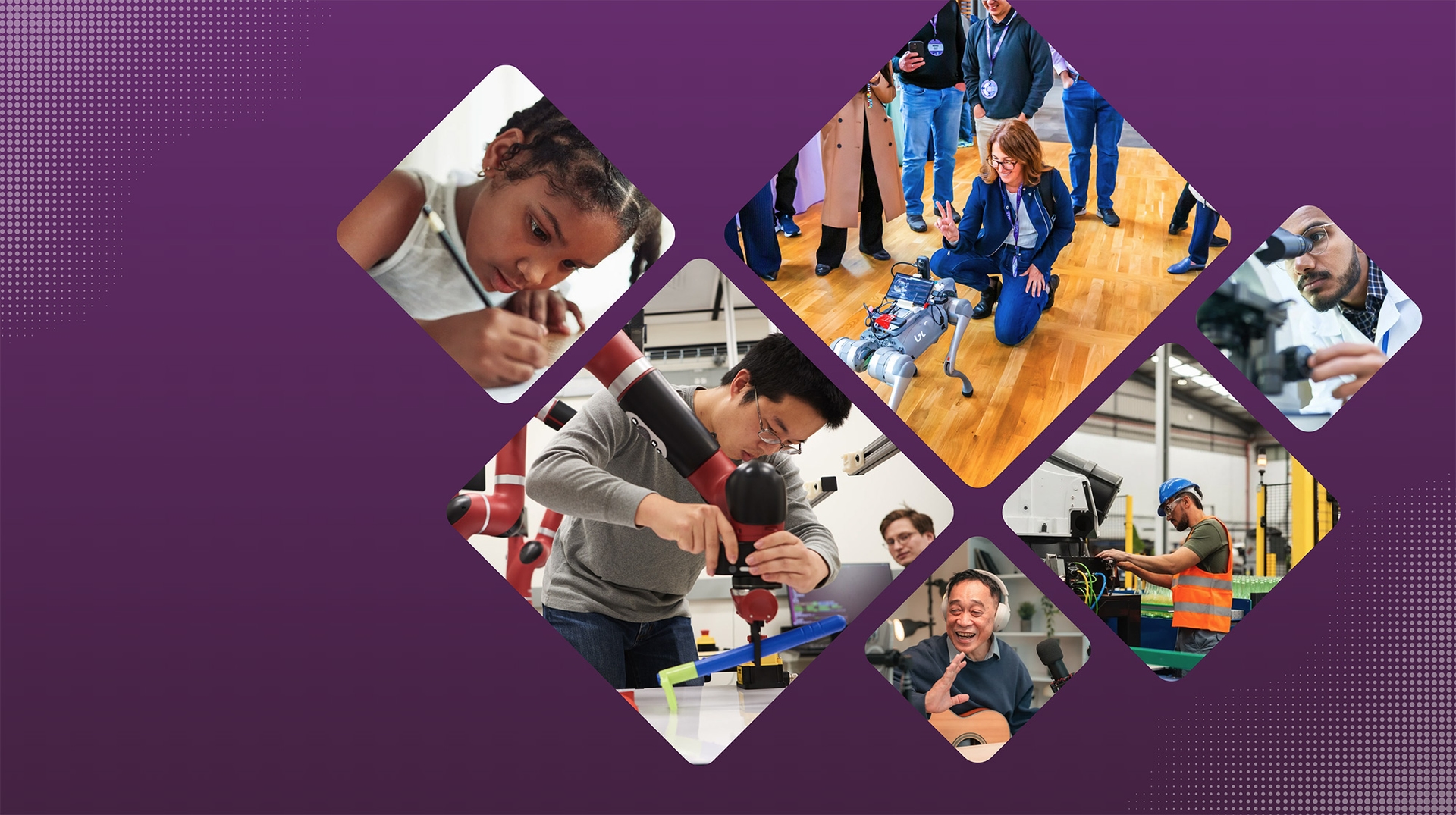
The rapid acceleration of AI comes with a profound wave of anxiety. Across every sector of society, people are facing unsettling questions about their worth and their place in a shifting world.
The rapid acceleration of AI comes with a profound wave of anxiety. Across every sector of society, people are facing unsettling questions about their worth and their place in a shifting world.

Biomni can analyze mountains of medical data, spot patterns humans might miss, and even design experiments—helping researchers make discoveries faster in the race to cure disease.

Biomni can analyze mountains of medical data, spot patterns humans might miss, and even design experiments—helping researchers make discoveries faster in the race to cure disease.

Environmental, social, and governance risks pose a threat to economies and human well-being around the world. However, we have the power to build a sustainable planet. Recent developments in AI are helping us see issues that were hard to identify before. As machine vision helps us see our world, we are able to detect issues, track them, and create targeted interventions. In this brief, we examine innovations by Stanford researchers that use AI and ML techniques to shift our world from one that depletes resources to one that preserves them for the future. For example, we can now track methane emissions across our energy and food systems, opening an avenue for policy formation and enforcement through near real-time tracing. AI enables knowledge-to-action and will play a key role in measuring and effectively achieving environmental, social, and governance goals.

Environmental, social, and governance risks pose a threat to economies and human well-being around the world. However, we have the power to build a sustainable planet. Recent developments in AI are helping us see issues that were hard to identify before. As machine vision helps us see our world, we are able to detect issues, track them, and create targeted interventions. In this brief, we examine innovations by Stanford researchers that use AI and ML techniques to shift our world from one that depletes resources to one that preserves them for the future. For example, we can now track methane emissions across our energy and food systems, opening an avenue for policy formation and enforcement through near real-time tracing. AI enables knowledge-to-action and will play a key role in measuring and effectively achieving environmental, social, and governance goals.

We invited 11 sci-fi filmmakers and AI researchers to Stanford for Stories for the Future, a day-and-a-half experiment in fostering new narratives about AI. Researchers shared perspectives on AI and filmmakers reflected on the challenges of writing AI narratives. Together researcher-writer pairs transformed a research paper into a written scene. The challenge? Each scene had to include an AI manifestation, but could not be about the personhood of AI or AI as a threat. Read the results of this project.

We invited 11 sci-fi filmmakers and AI researchers to Stanford for Stories for the Future, a day-and-a-half experiment in fostering new narratives about AI. Researchers shared perspectives on AI and filmmakers reflected on the challenges of writing AI narratives. Together researcher-writer pairs transformed a research paper into a written scene. The challenge? Each scene had to include an AI manifestation, but could not be about the personhood of AI or AI as a threat. Read the results of this project.
The Hoffman-Yee Research Grants are designed to address significant scientific, technical, or societal challenges requiring an interdisciplinary team and a bold approach.
These grants are made possible by a gift from philanthropists Reid Hoffman and Michelle Yee.
The Hoffman-Yee Research Grants are designed to address significant scientific, technical, or societal challenges requiring an interdisciplinary team and a bold approach.
These grants are made possible by a gift from philanthropists Reid Hoffman and Michelle Yee.
Response to OSTP's Request for Information on Accelerating the American Scientific Enterprise
Stanford scholars respond to a federal RFI on scientific discovery, calling for the government to support a new “team science” academic research model for AI-enabled discovery.
Stanford scholars respond to a federal RFI on scientific discovery, calling for the government to support a new “team science” academic research model for AI-enabled discovery.
All Work Published on Sciences (Social, Health, Biological, Physical)

New AI tools generate hypotheses, design experiments, and find patterns in data—transforming how scientists make discoveries across every field.
New AI tools generate hypotheses, design experiments, and find patterns in data—transforming how scientists make discoveries across every field.


This industry brief focuses on AI research in healthcare and life sciences, with particular attention to its implications in a post COVID-19 world. Stanford HAI synthesize the latest from Stanford faculty across drug discovery, telehealth, ambient intelligence, operational excellence, medical imaging, augmented intelligence, and data and privacy. Read to learn more about how the adoption of AI may transform these applications.
This industry brief focuses on AI research in healthcare and life sciences, with particular attention to its implications in a post COVID-19 world. Stanford HAI synthesize the latest from Stanford faculty across drug discovery, telehealth, ambient intelligence, operational excellence, medical imaging, augmented intelligence, and data and privacy. Read to learn more about how the adoption of AI may transform these applications.

Current societal trends reflect an increased mistrust in science and a lowered civic engagement that threaten to impair research that is foundational for ensuring public health and advancing health equity. One effective countermeasure to these trends lies in community-facing citizen science applications to increase public participation in scientific research, making this field an important target for artificial intelligence (AI) exploration. We highlight potentially promising citizen science AI applications that extend beyond individual use to the community level, including conversational large language models, text-to-image generative AI tools, descriptive analytics for analyzing integrated macro- and micro-level data, and predictive analytics. The novel adaptations of AI technologies for community-engaged participatory research also bring an array of potential risks. We highlight possible negative externalities and mitigations for some of the potential ethical and societal challenges in this field.
Current societal trends reflect an increased mistrust in science and a lowered civic engagement that threaten to impair research that is foundational for ensuring public health and advancing health equity. One effective countermeasure to these trends lies in community-facing citizen science applications to increase public participation in scientific research, making this field an important target for artificial intelligence (AI) exploration. We highlight potentially promising citizen science AI applications that extend beyond individual use to the community level, including conversational large language models, text-to-image generative AI tools, descriptive analytics for analyzing integrated macro- and micro-level data, and predictive analytics. The novel adaptations of AI technologies for community-engaged participatory research also bring an array of potential risks. We highlight possible negative externalities and mitigations for some of the potential ethical and societal challenges in this field.
We welcome proposals for research projects that tackle important challenges and opportunities in this space from either a technical or social science perspective, with findings that can generate policy insights and recommendations.
Policy Research Grants
We welcome proposals for research projects that tackle important challenges and opportunities in this space from either a technical or social science perspective, with findings that can generate policy insights and recommendations.
Russ Altman’s Testimony Before the U.S. Senate Committee on Health, Education, Labor, and Pensions

In this testimony presented to the U.S. Senate Committee on Health, Education, Labor, and Pensions hearing titled “AI’s Potential to Support Patients, Workers, Children, and Families,” Russ Altman highlights opportunities for congressional support to make AI applications for patient care and drug discovery stronger, safer, and human-centered.
In this testimony presented to the U.S. Senate Committee on Health, Education, Labor, and Pensions hearing titled “AI’s Potential to Support Patients, Workers, Children, and Families,” Russ Altman highlights opportunities for congressional support to make AI applications for patient care and drug discovery stronger, safer, and human-centered.
Russ Altman