Upcoming Events
Carina Hong | AI That Can Prove It: From Mathematical Discovery to Verified Software
A eureka moment is a two-step process: discovering something new and surprising, and establishing that it is correct. Drawing on her work at Axiom, Carina will discuss the transition from solving mathematical benchmarks to contributing to research, and from proving individual theorems to formalizing mathematical theories in Lean.
Carina Hong | AI That Can Prove It: From Mathematical Discovery to Verified Software
A eureka moment is a two-step process: discovering something new and surprising, and establishing that it is correct. Drawing on her work at Axiom, Carina will discuss the transition from solving mathematical benchmarks to contributing to research, and from proving individual theorems to formalizing mathematical theories in Lean.
Nicholas Branigan | Non-ergodicity and Simpson’s paradox in neural correlates
A Center for Neural Data Science Seminar Series
Nicholas Branigan | Non-ergodicity and Simpson’s paradox in neural correlates
A Center for Neural Data Science Seminar Series
Bay Area Tech Economics Seminar with Rehan Khan, Snowflake
The Bay Area Tech Economics Seminar is for graduate-trained economists and other quantitative social scientists from academia, policy, or the private sector who are interested in the tech economy and methods for analyzing it, and in making connections with others in this broadly defined space.
Bay Area Tech Economics Seminar with Rehan Khan, Snowflake
The Bay Area Tech Economics Seminar is for graduate-trained economists and other quantitative social scientists from academia, policy, or the private sector who are interested in the tech economy and methods for analyzing it, and in making connections with others in this broadly defined space.
Marlowe | AI + Data for Science with Anshul Kundaje
Sessions run Wednesdays from 4:30–5:30 PM in CoDa E160. Each session features a different Stanford speaker; talk titles are announced by the organizers.
Sessions run Wednesdays from 4:30–5:30 PM in CoDa E160. Each session features a different Stanford speaker; talk titles are announced by the organizers.
Daniel Rock | The Free Hypothesis: AI and Shifted Bottlenecks in Science
Scientific progress is a key driver of economic growth and prosperity. There is great excitement- but also concerns- about the impacts of AI on science, but so far little data. We provide early insights on this from three data sources: a sample of 15 million Gemini interactions, an inventory of over 2,600 specialized AI models across disciplines, and a survey of over 600 scientists.
Daniel Rock | The Free Hypothesis: AI and Shifted Bottlenecks in Science
Scientific progress is a key driver of economic growth and prosperity. There is great excitement- but also concerns- about the impacts of AI on science, but so far little data. We provide early insights on this from three data sources: a sample of 15 million Gemini interactions, an inventory of over 2,600 specialized AI models across disciplines, and a survey of over 600 scientists.
Confronting Our AI Future: Hope, Fear, and the Choices Ahead
The rapid acceleration of AI comes with a profound wave of anxiety. Across every sector of society, people are facing unsettling questions about their worth and their place in a shifting world.
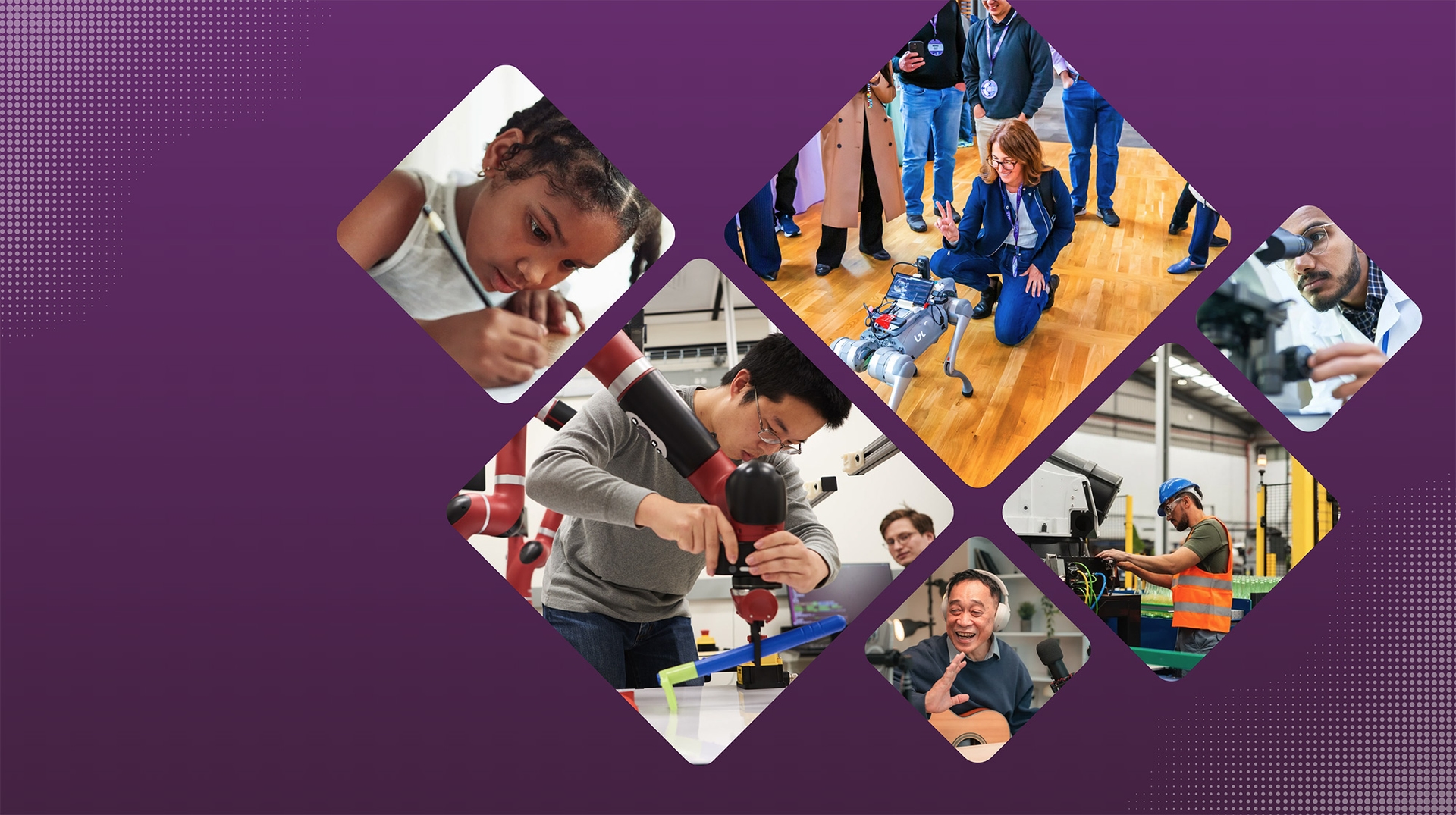
Confronting Our AI Future: Hope, Fear, and the Choices Ahead
The rapid acceleration of AI comes with a profound wave of anxiety. Across every sector of society, people are facing unsettling questions about their worth and their place in a shifting world.
Marlowe | AI + Data for Science with Dan Yamins
Sessions run Wednesdays from 4:30–5:30 PM in CoDa E160. Each session features a different Stanford speaker; talk titles are announced by the organizers.
Marlowe | AI + Data for Science with Dan Yamins
Sessions run Wednesdays from 4:30–5:30 PM in CoDa E160. Each session features a different Stanford speaker; talk titles are announced by the organizers.
Marcos Santiago Rojas Pino & Thomas Caruso | Building an International AI Platform for Health Professions Education and the Learning Sciences
Clinical Mind AI is a Stanford-developed, international collaborative platform designed to strengthen clinical reasoning education through AI-simulated patient encounters across health professions.
Marcos Santiago Rojas Pino & Thomas Caruso | Building an International AI Platform for Health Professions Education and the Learning Sciences
Clinical Mind AI is a Stanford-developed, international collaborative platform designed to strengthen clinical reasoning education through AI-simulated patient encounters across health professions.
Marlowe | AI + Data for Science with Ruijiang Li
Sessions run Wednesdays from 4:30–5:30 PM in CoDa E160. Each session features a different Stanford speaker; talk titles are announced by the organizers.
Marlowe | AI + Data for Science with Ruijiang Li
Sessions run Wednesdays from 4:30–5:30 PM in CoDa E160. Each session features a different Stanford speaker; talk titles are announced by the organizers.
CNDS Seminar - Daniel Wurgaft
A Center for Neural Data Science Seminar Series
CNDS Seminar - Daniel Wurgaft
A Center for Neural Data Science Seminar Series
Marlowe | AI + Data for Science with Mohsen Bayati
Sessions run Wednesdays from 4:30–5:30 PM in CoDa E160. Each session features a different Stanford speaker; talk titles are announced by the organizers.
Sessions run Wednesdays from 4:30–5:30 PM in CoDa E160. Each session features a different Stanford speaker; talk titles are announced by the organizers.
AI100 | AI Goes Mainstream: The Scaling Era and the Rise of Generative AI
This talk will cover key insights from the third AI100 report, AI Goes Mainstream: The Scaling Era and the Rise of Generative AI, set for release in November 2026. The report was commissioned by the AI100 standing committee and led by study panel chair Michael Wooldridge.
AI100 | AI Goes Mainstream: The Scaling Era and the Rise of Generative AI
This talk will cover key insights from the third AI100 report, AI Goes Mainstream: The Scaling Era and the Rise of Generative AI, set for release in November 2026. The report was commissioned by the AI100 standing committee and led by study panel chair Michael Wooldridge.
Marlowe | AI + Data for Science with Andreas Tolias
Sessions run Wednesdays from 4:30–5:30 PM in CoDa E160. Each session features a different Stanford speaker; talk titles are announced by the organizers.
Sessions run Wednesdays from 4:30–5:30 PM in CoDa E160. Each session features a different Stanford speaker; talk titles are announced by the organizers.
Marlowe | AI + Data for Science with Leonidas Guibas
Sessions run Wednesdays from 4:30–5:30 PM in CoDa E160. Each session features a different Stanford speaker; talk titles are announced by the organizers.
Sessions run Wednesdays from 4:30–5:30 PM in CoDa E160. Each session features a different Stanford speaker; talk titles are announced by the organizers.
Angèle Christin & Hannah Zeavin | Gurus, Hucksters, Entertainers: How Influencers Reshaped Social Media
Please join us for an illuminating investigation of the complex work of social media content creators—their lives, conflicts, and controversies.
Angèle Christin & Hannah Zeavin | Gurus, Hucksters, Entertainers: How Influencers Reshaped Social Media
Please join us for an illuminating investigation of the complex work of social media content creators—their lives, conflicts, and controversies.
YoungJu Jo | Data-driven discovery and control of neural computations
A Center for Neural Data Science Seminar Series
YoungJu Jo | Data-driven discovery and control of neural computations
A Center for Neural Data Science Seminar Series
Featured Videos
Hear from speakers and attendees at recent Stanford HAI events across research, policy, and education.
Previous Events at HAI
Facial Recognition Technology, Measurement & Regulation Workshop
The workshop convened leading academics, computer vision experts, and representatives from civil society, government, and industry to discuss critical questions and develop a whitepaper that makes recommendations related to assessing the performance of facial recognition technology.
Facial Recognition Technology, Measurement & Regulation Workshop
The workshop convened leading academics, computer vision experts, and representatives from civil society, government, and industry to discuss critical questions and develop a whitepaper that makes recommendations related to assessing the performance of facial recognition technology.
Psychology-Neuroscience-Artificial Intelligence, Part 2
AI and International Security
Workshop Leader: Emilie Silva
A one-day interdisciplinary workshop involving Stanford faculty and researchers, a select number of outside academics from other institutions, and a small number of private sector and governmental analysts to focus on the intersection of AI and various aspects of international security. The goal was to identify concrete research agendas and synergies, identify gaps in our understanding, and build a network of scholars and experts to address these challenges.
The past several years have seen startling advances in artificial intelligence and machine learning,
driven in part by advances in deep neural networks.3 AI-enabled machines can now meet or exceed
human abilities in a wide range of tasks, including chess, Jeopardy, Go, poker, object recognition,
and driving in some settings. AI systems are being applied to solve a range of problems in
transportation, finance, stock trading, health care, intelligence analysis, and cybersecurity. Despite
calls from prominent scientists to avoid militarizing AI,4 nation-states are certain to use AI and
machine learning tools for national security purposes.
A technology that has the potential for such sweeping changes across human society should be
evaluated for its potential effects on international stability. Many national security applications of
AI could be beneficial, such as advanced cyber defenses that can identify new malware, automated
computer security tools to find and patch vulnerabilities, or machine learning systems to uncover
suspicious behavior by terrorists. Current AI systems have substantial limitations and
vulnerabilities, however, and a headlong rush into national security applications of artificial
intelligence could pose risks to international stability. Some security related applications of AI
could be destabilizing, and competitive dynamics between nations could lead to harmful
consequences such as a “race to the bottom” on AI safety. Other security related applications of AI
could improve international stability.
CNAS is undertaking a two-year, in-depth, interdisciplinary project to examine how artificial
intelligence will influence international security and stability. It is critical for global stability to
begin to a discussion about ways to mitigate the risks while taking advantage of the benefits of
autonomous systems and artificial intelligence. This project will build a community from three
sectors of academia, business, and the policy world that often do not intersect – AI researchers in
academia and business; international security academic experts; and policy practitioners in the
government, both civilian and military. Through a series of workshops, commissioned papers, and
reports, this project will foster a community of practice and begin laying the foundations for a field
of study on AI and international security. The project will conclude with recommendations to
policymakers for ways to capitalize on the potential stabilizing benefits of artificial intelligence,
while avoiding uses that could undermine stability.
AI and International Security
Workshop Leader: Emilie Silva
A one-day interdisciplinary workshop involving Stanford faculty and researchers, a select number of outside academics from other institutions, and a small number of private sector and governmental analysts to focus on the intersection of AI and various aspects of international security. The goal was to identify concrete research agendas and synergies, identify gaps in our understanding, and build a network of scholars and experts to address these challenges.
The past several years have seen startling advances in artificial intelligence and machine learning,
driven in part by advances in deep neural networks.3 AI-enabled machines can now meet or exceed
human abilities in a wide range of tasks, including chess, Jeopardy, Go, poker, object recognition,
and driving in some settings. AI systems are being applied to solve a range of problems in
transportation, finance, stock trading, health care, intelligence analysis, and cybersecurity. Despite
calls from prominent scientists to avoid militarizing AI,4 nation-states are certain to use AI and
machine learning tools for national security purposes.
A technology that has the potential for such sweeping changes across human society should be
evaluated for its potential effects on international stability. Many national security applications of
AI could be beneficial, such as advanced cyber defenses that can identify new malware, automated
computer security tools to find and patch vulnerabilities, or machine learning systems to uncover
suspicious behavior by terrorists. Current AI systems have substantial limitations and
vulnerabilities, however, and a headlong rush into national security applications of artificial
intelligence could pose risks to international stability. Some security related applications of AI
could be destabilizing, and competitive dynamics between nations could lead to harmful
consequences such as a “race to the bottom” on AI safety. Other security related applications of AI
could improve international stability.
CNAS is undertaking a two-year, in-depth, interdisciplinary project to examine how artificial
intelligence will influence international security and stability. It is critical for global stability to
begin to a discussion about ways to mitigate the risks while taking advantage of the benefits of
autonomous systems and artificial intelligence. This project will build a community from three
sectors of academia, business, and the policy world that often do not intersect – AI researchers in
academia and business; international security academic experts; and policy practitioners in the
government, both civilian and military. Through a series of workshops, commissioned papers, and
reports, this project will foster a community of practice and begin laying the foundations for a field
of study on AI and international security. The project will conclude with recommendations to
policymakers for ways to capitalize on the potential stabilizing benefits of artificial intelligence,
while avoiding uses that could undermine stability.
Psychology-Neuroscience-Artificial Intelligence, Part 1
Psychology-Neuroscience-Artificial Intelligence, Part 1
Uncertainty in AI
Faculty Leaders: Elaine Treharne and Mark Algee-Hewitt
This workshop focused on “Uncertainty in AI Situations” asks researchers to consider what
an AI can do when faced with uncertainty. Machine learning algorithms whose
classifications rely on posterior probabilities of membership often present ambiguous
results, where due to unavailable training data or ambiguous cases, the likelihood of any
outcome is approximately even. In such situations, the human programmers must decide
how the machine handles ambiguity: whether making a “best-fit” classification or reporting
potential error, there is always a potential conflict between the mathematical rigor of the
model and the ambiguity of real-world use cases.
Some questions asked that begin the process of advancing AI to a new intellectual understanding of the trickiest problems in the machine-learning environment.
• How do researchers create training sets that engage with uncertainty, particularly
when deciding between reflecting real-world data and curating data sets to avoid
bias?
• How can we frame ontologies, typologies, and epistemologies that can account for,
and help solve, ambiguity in data and indecision in AI?
Uncertainty in AI
Faculty Leaders: Elaine Treharne and Mark Algee-Hewitt
This workshop focused on “Uncertainty in AI Situations” asks researchers to consider what
an AI can do when faced with uncertainty. Machine learning algorithms whose
classifications rely on posterior probabilities of membership often present ambiguous
results, where due to unavailable training data or ambiguous cases, the likelihood of any
outcome is approximately even. In such situations, the human programmers must decide
how the machine handles ambiguity: whether making a “best-fit” classification or reporting
potential error, there is always a potential conflict between the mathematical rigor of the
model and the ambiguity of real-world use cases.
Some questions asked that begin the process of advancing AI to a new intellectual understanding of the trickiest problems in the machine-learning environment.
• How do researchers create training sets that engage with uncertainty, particularly
when deciding between reflecting real-world data and curating data sets to avoid
bias?
• How can we frame ontologies, typologies, and epistemologies that can account for,
and help solve, ambiguity in data and indecision in AI?
AI and Ethics
Faculty Leaders: Rob Reich and Seth Lazar
Conversations about ethics and AI are commonplace today, but they are often pitched at a high level of generality or abstraction. In this workshop, we gathered together leading young scholars, chiefly philosophers, to discuss a more detailed research agenda with a particular focus on moral and political philosophy and their intersections with AI. Topics included AI and explainability, AI and value alignment, governance of AI, and more.
AI and Ethics
Faculty Leaders: Rob Reich and Seth Lazar
Conversations about ethics and AI are commonplace today, but they are often pitched at a high level of generality or abstraction. In this workshop, we gathered together leading young scholars, chiefly philosophers, to discuss a more detailed research agenda with a particular focus on moral and political philosophy and their intersections with AI. Topics included AI and explainability, AI and value alignment, governance of AI, and more.