Upcoming Events
Alexandr Lenk & Arvind Karunakaran | Industry Conversation with Instacart
This seminar pairs a case study of AI diffusion with an organizational approach to technological changes in the workplace.
Alexandr Lenk & Arvind Karunakaran | Industry Conversation with Instacart
This seminar pairs a case study of AI diffusion with an organizational approach to technological changes in the workplace.
Marlowe | AI + Data for Science with Stephen Baccus
Sessions run Wednesdays from 4:30–5:30 PM in CoDa E160. Each session features a different Stanford speaker; talk titles are announced by the organizers.
Sessions run Wednesdays from 4:30–5:30 PM in CoDa E160. Each session features a different Stanford speaker; talk titles are announced by the organizers.
World Development Report 2026: The Promise of Artificial Intelligence
World Development Report 2026: The Promise of Artificial Intelligence
Daniel Zhang, Caroline Meinhardt, Jiajun Wu, and Russell Wald | The World Model and Spatial Intelligence Era: Governing AI Beyond Language
As AI moves beyond language into systems that can perceive, understand, and act in the physical world, a new frontier is emerging: world models—AI systems that build and maintain working representations of real environments to predict how they change in response to action.
Daniel Zhang, Caroline Meinhardt, Jiajun Wu, and Russell Wald | The World Model and Spatial Intelligence Era: Governing AI Beyond Language
As AI moves beyond language into systems that can perceive, understand, and act in the physical world, a new frontier is emerging: world models—AI systems that build and maintain working representations of real environments to predict how they change in response to action.
Marlowe | AI + Data for Science with Gordon Wetzstein
Sessions run Wednesdays from 4:30–5:30 PM in CoDa E160. Each session features a different Stanford speaker; talk titles are announced by the organizers.
Sessions run Wednesdays from 4:30–5:30 PM in CoDa E160. Each session features a different Stanford speaker; talk titles are announced by the organizers.
Anastasios Angelopoulos | Measuring AI in the Real World
This seminar co-hosted with the AI Measurement Science Center (AIMS) invites speakers to discuss academic work in AI evaluation and measurement science.
Anastasios Angelopoulos | Measuring AI in the Real World
This seminar co-hosted with the AI Measurement Science Center (AIMS) invites speakers to discuss academic work in AI evaluation and measurement science.
Tim de Silva | AI Financial Advice: Supply, Demand, and Life Cycle Implications
Tim de Silva | AI Financial Advice: Supply, Demand, and Life Cycle Implications
Marlowe | AI + Data for Science with Olivier Gevaert
Sessions run Wednesdays from 4:30–5:30 PM in CoDa E160. Each session features a different Stanford speaker; talk titles are announced by the organizers.
Sessions run Wednesdays from 4:30–5:30 PM in CoDa E160. Each session features a different Stanford speaker; talk titles are announced by the organizers.
Marlowe | AI + Data for Science with Curtis Langlotz
Sessions run Wednesdays from 4:30–5:30 PM in CoDa E160. Each session features a different Stanford speaker; talk titles are announced by the organizers.
Sessions run Wednesdays from 4:30–5:30 PM in CoDa E160. Each session features a different Stanford speaker; talk titles are announced by the organizers.
Marlowe | AI + Data for Science with Anshul Kundaje
Sessions run Wednesdays from 4:30–5:30 PM in CoDa E160. Each session features a different Stanford speaker; talk titles are announced by the organizers.
Sessions run Wednesdays from 4:30–5:30 PM in CoDa E160. Each session features a different Stanford speaker; talk titles are announced by the organizers.
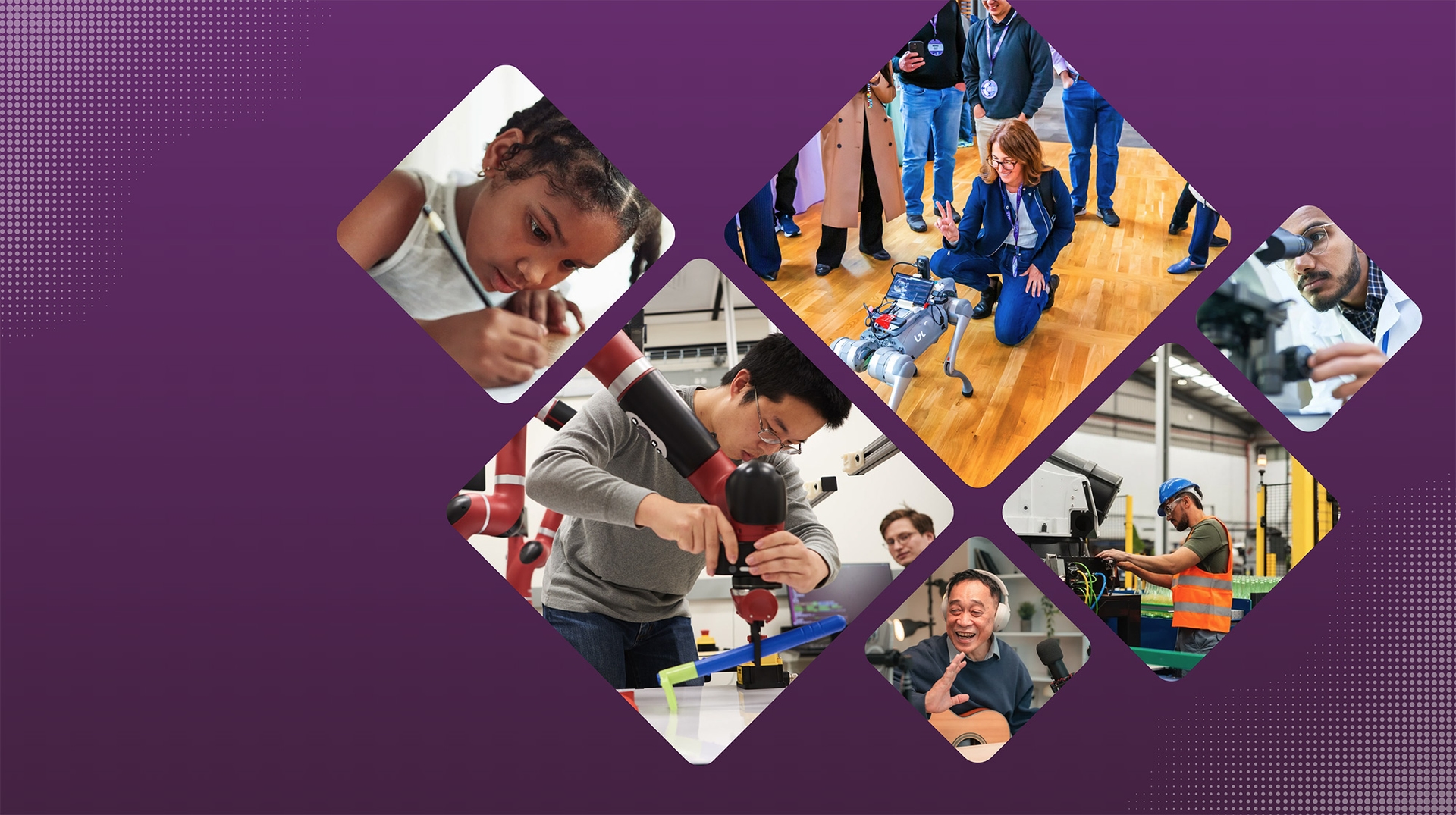
Confronting Our AI Future: Hope, Fear, and the Choices Ahead
The rapid acceleration of AI comes with a profound wave of anxiety. Across every sector of society, people are facing unsettling questions about their worth and their place in a shifting world.
Confronting Our AI Future: Hope, Fear, and the Choices Ahead
The rapid acceleration of AI comes with a profound wave of anxiety. Across every sector of society, people are facing unsettling questions about their worth and their place in a shifting world.
Marlowe | AI + Data for Science with Dan Yamins
Sessions run Wednesdays from 4:30–5:30 PM in CoDa E160. Each session features a different Stanford speaker; talk titles are announced by the organizers.
Marlowe | AI + Data for Science with Dan Yamins
Sessions run Wednesdays from 4:30–5:30 PM in CoDa E160. Each session features a different Stanford speaker; talk titles are announced by the organizers.
Marcos Santiago Rojas Pino & Thomas Caruso | Building an International AI Platform for Health Professions Education and the Learning Sciences
Clinical Mind AI is a Stanford-developed, international collaborative platform designed to strengthen clinical reasoning education through AI-simulated patient encounters across health professions.
Marcos Santiago Rojas Pino & Thomas Caruso | Building an International AI Platform for Health Professions Education and the Learning Sciences
Clinical Mind AI is a Stanford-developed, international collaborative platform designed to strengthen clinical reasoning education through AI-simulated patient encounters across health professions.
Marlowe | AI + Data for Science with Ruijiang Li
Sessions run Wednesdays from 4:30–5:30 PM in CoDa E160. Each session features a different Stanford speaker; talk titles are announced by the organizers.
Marlowe | AI + Data for Science with Ruijiang Li
Sessions run Wednesdays from 4:30–5:30 PM in CoDa E160. Each session features a different Stanford speaker; talk titles are announced by the organizers.
Marlowe | AI + Data for Science with Mohsen Bayati
Sessions run Wednesdays from 4:30–5:30 PM in CoDa E160. Each session features a different Stanford speaker; talk titles are announced by the organizers.
Sessions run Wednesdays from 4:30–5:30 PM in CoDa E160. Each session features a different Stanford speaker; talk titles are announced by the organizers.
AI100 | AI Goes Mainstream: The Scaling Era and the Rise of Generative AI
This talk will cover key insights from the third AI100 report, AI Goes Mainstream: The Scaling Era and the Rise of Generative AI, set for release in October 2026. The report was commissioned by the AI100 standing committee and led by study panel chair Michael Wooldridge.
AI100 | AI Goes Mainstream: The Scaling Era and the Rise of Generative AI
This talk will cover key insights from the third AI100 report, AI Goes Mainstream: The Scaling Era and the Rise of Generative AI, set for release in October 2026. The report was commissioned by the AI100 standing committee and led by study panel chair Michael Wooldridge.
Marlowe | AI + Data for Science with Andreas Tolias
Sessions run Wednesdays from 4:30–5:30 PM in CoDa E160. Each session features a different Stanford speaker; talk titles are announced by the organizers.
Sessions run Wednesdays from 4:30–5:30 PM in CoDa E160. Each session features a different Stanford speaker; talk titles are announced by the organizers.
Marlowe | AI + Data for Science with Leonidas Guibas
Sessions run Wednesdays from 4:30–5:30 PM in CoDa E160. Each session features a different Stanford speaker; talk titles are announced by the organizers.
Sessions run Wednesdays from 4:30–5:30 PM in CoDa E160. Each session features a different Stanford speaker; talk titles are announced by the organizers.
Angèle Christin & Hannah Zeavin | Gurus, Hucksters, Entertainers: How Influencers Reshaped Social Media
Please join us for an illuminating investigation of the complex work of social media content creators—their lives, conflicts, and controversies.
Angèle Christin & Hannah Zeavin | Gurus, Hucksters, Entertainers: How Influencers Reshaped Social Media
Please join us for an illuminating investigation of the complex work of social media content creators—their lives, conflicts, and controversies.
Featured Videos
Hear from speakers and attendees at recent Stanford HAI events across research, policy, and education.
Previous Events at HAI
AI and International Security
Workshop Leader: Emilie Silva
A one-day interdisciplinary workshop involving Stanford faculty and researchers, a select number of outside academics from other institutions, and a small number of private sector and governmental analysts to focus on the intersection of AI and various aspects of international security. The goal was to identify concrete research agendas and synergies, identify gaps in our understanding, and build a network of scholars and experts to address these challenges.
The past several years have seen startling advances in artificial intelligence and machine learning,
driven in part by advances in deep neural networks.3 AI-enabled machines can now meet or exceed
human abilities in a wide range of tasks, including chess, Jeopardy, Go, poker, object recognition,
and driving in some settings. AI systems are being applied to solve a range of problems in
transportation, finance, stock trading, health care, intelligence analysis, and cybersecurity. Despite
calls from prominent scientists to avoid militarizing AI,4 nation-states are certain to use AI and
machine learning tools for national security purposes.
A technology that has the potential for such sweeping changes across human society should be
evaluated for its potential effects on international stability. Many national security applications of
AI could be beneficial, such as advanced cyber defenses that can identify new malware, automated
computer security tools to find and patch vulnerabilities, or machine learning systems to uncover
suspicious behavior by terrorists. Current AI systems have substantial limitations and
vulnerabilities, however, and a headlong rush into national security applications of artificial
intelligence could pose risks to international stability. Some security related applications of AI
could be destabilizing, and competitive dynamics between nations could lead to harmful
consequences such as a “race to the bottom” on AI safety. Other security related applications of AI
could improve international stability.
CNAS is undertaking a two-year, in-depth, interdisciplinary project to examine how artificial
intelligence will influence international security and stability. It is critical for global stability to
begin to a discussion about ways to mitigate the risks while taking advantage of the benefits of
autonomous systems and artificial intelligence. This project will build a community from three
sectors of academia, business, and the policy world that often do not intersect – AI researchers in
academia and business; international security academic experts; and policy practitioners in the
government, both civilian and military. Through a series of workshops, commissioned papers, and
reports, this project will foster a community of practice and begin laying the foundations for a field
of study on AI and international security. The project will conclude with recommendations to
policymakers for ways to capitalize on the potential stabilizing benefits of artificial intelligence,
while avoiding uses that could undermine stability.
AI and International Security
Workshop Leader: Emilie Silva
A one-day interdisciplinary workshop involving Stanford faculty and researchers, a select number of outside academics from other institutions, and a small number of private sector and governmental analysts to focus on the intersection of AI and various aspects of international security. The goal was to identify concrete research agendas and synergies, identify gaps in our understanding, and build a network of scholars and experts to address these challenges.
The past several years have seen startling advances in artificial intelligence and machine learning,
driven in part by advances in deep neural networks.3 AI-enabled machines can now meet or exceed
human abilities in a wide range of tasks, including chess, Jeopardy, Go, poker, object recognition,
and driving in some settings. AI systems are being applied to solve a range of problems in
transportation, finance, stock trading, health care, intelligence analysis, and cybersecurity. Despite
calls from prominent scientists to avoid militarizing AI,4 nation-states are certain to use AI and
machine learning tools for national security purposes.
A technology that has the potential for such sweeping changes across human society should be
evaluated for its potential effects on international stability. Many national security applications of
AI could be beneficial, such as advanced cyber defenses that can identify new malware, automated
computer security tools to find and patch vulnerabilities, or machine learning systems to uncover
suspicious behavior by terrorists. Current AI systems have substantial limitations and
vulnerabilities, however, and a headlong rush into national security applications of artificial
intelligence could pose risks to international stability. Some security related applications of AI
could be destabilizing, and competitive dynamics between nations could lead to harmful
consequences such as a “race to the bottom” on AI safety. Other security related applications of AI
could improve international stability.
CNAS is undertaking a two-year, in-depth, interdisciplinary project to examine how artificial
intelligence will influence international security and stability. It is critical for global stability to
begin to a discussion about ways to mitigate the risks while taking advantage of the benefits of
autonomous systems and artificial intelligence. This project will build a community from three
sectors of academia, business, and the policy world that often do not intersect – AI researchers in
academia and business; international security academic experts; and policy practitioners in the
government, both civilian and military. Through a series of workshops, commissioned papers, and
reports, this project will foster a community of practice and begin laying the foundations for a field
of study on AI and international security. The project will conclude with recommendations to
policymakers for ways to capitalize on the potential stabilizing benefits of artificial intelligence,
while avoiding uses that could undermine stability.
AI for Good Seminar Series: AI for Human Rights
AI for Good Seminar Series: AI for Human Rights
HAI Weekly Seminar with Garance Burke - Steering Journalism Towards Data Science
HAI Weekly Seminar with Garance Burke - Steering Journalism Towards Data Science
HAI Weekly Seminar with Lucy Suchman - Demystifying AI as an Ethical Project
This talk develops the proposal that a central – and neglected – ethical challenge for the field of AI is demystification of the techniques and technologies that constitute it
This talk develops the proposal that a central – and neglected – ethical challenge for the field of AI is demystification of the techniques and technologies that constitute it
HAI Monthly Community Building Reception - A Conversation about AI Governance
Join California Supreme Court Justice Cuéllar, who teaches the popular “Regulating AI” course at Stanford, Dan Ho, Associate Director of HAI and professor at the law school and political science, and Terah Lyons, the Founding Executive Director of the Partnership on AI, for a conversation on the law, regulation, and governance of AI! The three will provide a range of perspectives on the promise, challenges, and directions for AI governance.
HAI Monthly Community Building Reception - A Conversation about AI Governance
Join California Supreme Court Justice Cuéllar, who teaches the popular “Regulating AI” course at Stanford, Dan Ho, Associate Director of HAI and professor at the law school and political science, and Terah Lyons, the Founding Executive Director of the Partnership on AI, for a conversation on the law, regulation, and governance of AI! The three will provide a range of perspectives on the promise, challenges, and directions for AI governance.
AI for Good Seminar Series: AI for Healthcare
AI for Healthcare session will feature Marzyeh Ghassemi who targets “Healthy ML” focusing on creating and applying machine learning to understand and improve health. Improving health requires targeting and evidence. Marzyeh tackles part of this puzzle with machine learning. This session will cover some of the novel technical opportunities for machine learning in health challenges and the important progress to be made with a careful application to domain. She will also walk through the danger of applying methods without a robust understanding of the domain, and potential downstream uses.
AI for Good Seminar Series: AI for Healthcare
AI for Healthcare session will feature Marzyeh Ghassemi who targets “Healthy ML” focusing on creating and applying machine learning to understand and improve health. Improving health requires targeting and evidence. Marzyeh tackles part of this puzzle with machine learning. This session will cover some of the novel technical opportunities for machine learning in health challenges and the important progress to be made with a careful application to domain. She will also walk through the danger of applying methods without a robust understanding of the domain, and potential downstream uses.
HAI Weekly Seminar with Bongjun Ko - The Value of Data: An Engineer’s Perspective
Recent advances of artificial intelligence and deep learning have been undoubtedly driven by a large amount of data amassed over the years, helping firms, researchers, and practitioners achieve many amazing feats, most notably in recognition tasks often surpassing human ability in several benchmarks.
HAI Weekly Seminar with Bongjun Ko - The Value of Data: An Engineer’s Perspective
Recent advances of artificial intelligence and deep learning have been undoubtedly driven by a large amount of data amassed over the years, helping firms, researchers, and practitioners achieve many amazing feats, most notably in recognition tasks often surpassing human ability in several benchmarks.
Psychology-Neuroscience-Artificial Intelligence, Part 1
Psychology-Neuroscience-Artificial Intelligence, Part 1
AI for Good Seminar Series: AI for Government
AI promises to transform how government agencies work. Where will it have the biggest impact? What are some challenges around transparency, privacy, bias, and accountability? This talk will go beyond the headlines and share highlights of a just-completed report on AI in the US Government.
AI for Good Seminar Series: AI for Government
AI promises to transform how government agencies work. Where will it have the biggest impact? What are some challenges around transparency, privacy, bias, and accountability? This talk will go beyond the headlines and share highlights of a just-completed report on AI in the US Government.
AI for Good Seminar Series: AI for Earth and the Environment
How can AI and machine learning be leveraged to mitigate the impact of human activities on earth’s natural systems? Learn about data science tools and strategies being used to safeguard our water supply, feed the worldwide human population, and promote greater biodiversity and global sustainability.
AI for Good Seminar Series: AI for Earth and the Environment
How can AI and machine learning be leveraged to mitigate the impact of human activities on earth’s natural systems? Learn about data science tools and strategies being used to safeguard our water supply, feed the worldwide human population, and promote greater biodiversity and global sustainability.