Upcoming Events
Alexandr Lenk & Arvind Karunakaran | Industry Conversation with Instacart
This seminar pairs a case study of AI diffusion with an organizational approach to technological changes in the workplace.
Alexandr Lenk & Arvind Karunakaran | Industry Conversation with Instacart
This seminar pairs a case study of AI diffusion with an organizational approach to technological changes in the workplace.
Marlowe | AI + Data for Science with Stephen Baccus
Sessions run Wednesdays from 4:30–5:30 PM in CoDa E160. Each session features a different Stanford speaker; talk titles are announced by the organizers.
Sessions run Wednesdays from 4:30–5:30 PM in CoDa E160. Each session features a different Stanford speaker; talk titles are announced by the organizers.
World Development Report 2026: The Promise of Artificial Intelligence
World Development Report 2026: The Promise of Artificial Intelligence
Daniel Zhang, Caroline Meinhardt, Jiajun Wu, and Russell Wald | The World Model and Spatial Intelligence Era: Governing AI Beyond Language
As AI moves beyond language into systems that can perceive, understand, and act in the physical world, a new frontier is emerging: world models—AI systems that build and maintain working representations of real environments to predict how they change in response to action.
Daniel Zhang, Caroline Meinhardt, Jiajun Wu, and Russell Wald | The World Model and Spatial Intelligence Era: Governing AI Beyond Language
As AI moves beyond language into systems that can perceive, understand, and act in the physical world, a new frontier is emerging: world models—AI systems that build and maintain working representations of real environments to predict how they change in response to action.
Marlowe | AI + Data for Science with Gordon Wetzstein
Sessions run Wednesdays from 4:30–5:30 PM in CoDa E160. Each session features a different Stanford speaker; talk titles are announced by the organizers.
Sessions run Wednesdays from 4:30–5:30 PM in CoDa E160. Each session features a different Stanford speaker; talk titles are announced by the organizers.
Anastasios Angelopoulos | Measuring AI in the Real World
This seminar co-hosted with the AI Measurement Science Center (AIMS) invites speakers to discuss academic work in AI evaluation and measurement science.
Anastasios Angelopoulos | Measuring AI in the Real World
This seminar co-hosted with the AI Measurement Science Center (AIMS) invites speakers to discuss academic work in AI evaluation and measurement science.
Tim de Silva | AI Financial Advice: Supply, Demand, and Life Cycle Implications
Tim de Silva | AI Financial Advice: Supply, Demand, and Life Cycle Implications
Marlowe | AI + Data for Science with Olivier Gevaert
Sessions run Wednesdays from 4:30–5:30 PM in CoDa E160. Each session features a different Stanford speaker; talk titles are announced by the organizers.
Sessions run Wednesdays from 4:30–5:30 PM in CoDa E160. Each session features a different Stanford speaker; talk titles are announced by the organizers.
Marlowe | AI + Data for Science with Curtis Langlotz
Sessions run Wednesdays from 4:30–5:30 PM in CoDa E160. Each session features a different Stanford speaker; talk titles are announced by the organizers.
Sessions run Wednesdays from 4:30–5:30 PM in CoDa E160. Each session features a different Stanford speaker; talk titles are announced by the organizers.
Marlowe | AI + Data for Science with Anshul Kundaje
Sessions run Wednesdays from 4:30–5:30 PM in CoDa E160. Each session features a different Stanford speaker; talk titles are announced by the organizers.
Sessions run Wednesdays from 4:30–5:30 PM in CoDa E160. Each session features a different Stanford speaker; talk titles are announced by the organizers.
Confronting Our AI Future: Hope, Fear, and the Choices Ahead
The rapid acceleration of AI comes with a profound wave of anxiety. Across every sector of society, people are facing unsettling questions about their worth and their place in a shifting world.
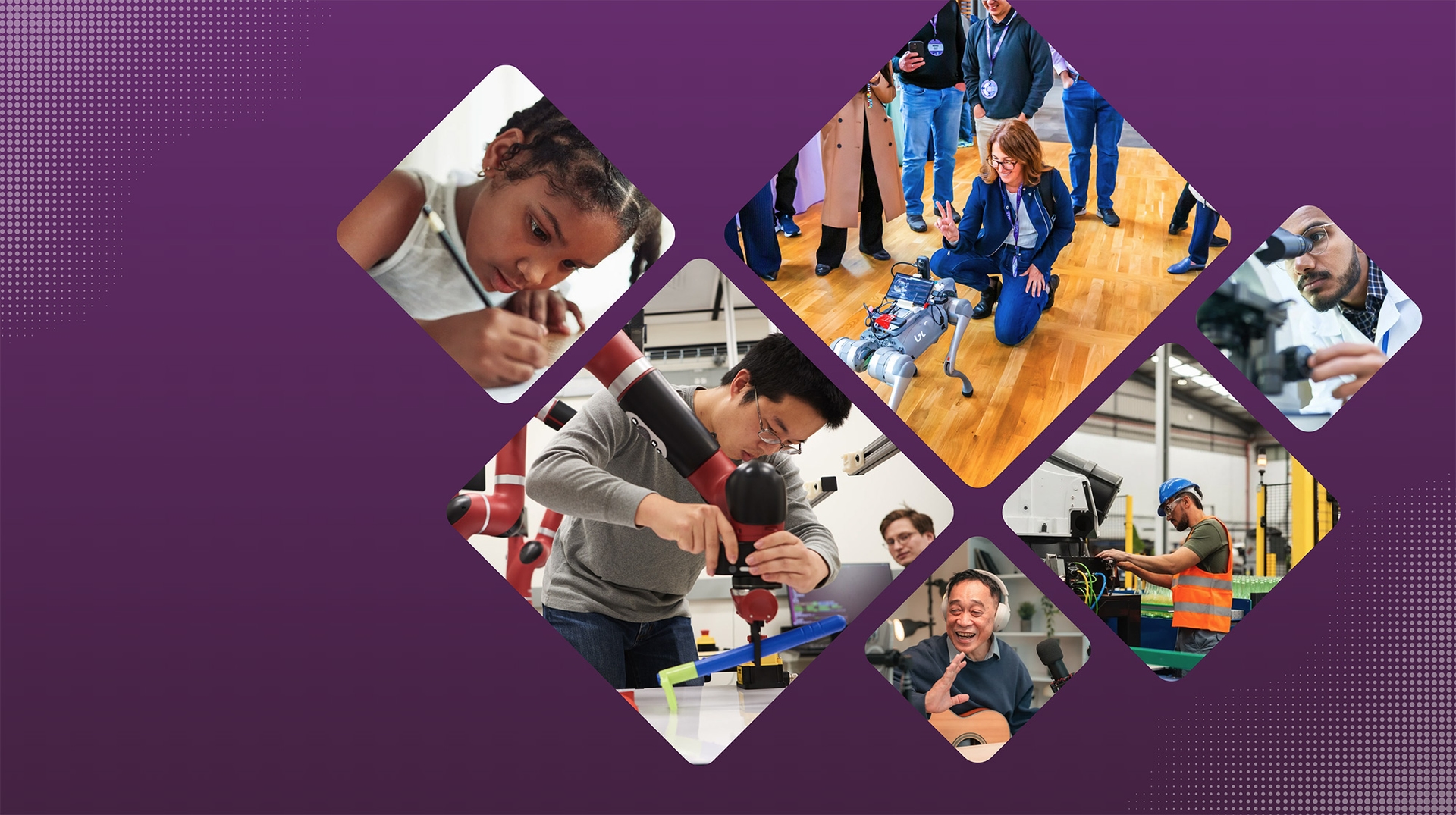
Confronting Our AI Future: Hope, Fear, and the Choices Ahead
The rapid acceleration of AI comes with a profound wave of anxiety. Across every sector of society, people are facing unsettling questions about their worth and their place in a shifting world.
Marlowe | AI + Data for Science with Dan Yamins
Sessions run Wednesdays from 4:30–5:30 PM in CoDa E160. Each session features a different Stanford speaker; talk titles are announced by the organizers.
Marlowe | AI + Data for Science with Dan Yamins
Sessions run Wednesdays from 4:30–5:30 PM in CoDa E160. Each session features a different Stanford speaker; talk titles are announced by the organizers.
Marcos Santiago Rojas Pino & Thomas Caruso | Building an International AI Platform for Health Professions Education and the Learning Sciences
Clinical Mind AI is a Stanford-developed, international collaborative platform designed to strengthen clinical reasoning education through AI-simulated patient encounters across health professions.
Marcos Santiago Rojas Pino & Thomas Caruso | Building an International AI Platform for Health Professions Education and the Learning Sciences
Clinical Mind AI is a Stanford-developed, international collaborative platform designed to strengthen clinical reasoning education through AI-simulated patient encounters across health professions.
Marlowe | AI + Data for Science with Ruijiang Li
Sessions run Wednesdays from 4:30–5:30 PM in CoDa E160. Each session features a different Stanford speaker; talk titles are announced by the organizers.
Marlowe | AI + Data for Science with Ruijiang Li
Sessions run Wednesdays from 4:30–5:30 PM in CoDa E160. Each session features a different Stanford speaker; talk titles are announced by the organizers.
Marlowe | AI + Data for Science with Mohsen Bayati
Sessions run Wednesdays from 4:30–5:30 PM in CoDa E160. Each session features a different Stanford speaker; talk titles are announced by the organizers.
Sessions run Wednesdays from 4:30–5:30 PM in CoDa E160. Each session features a different Stanford speaker; talk titles are announced by the organizers.
AI100 | AI Goes Mainstream: The Scaling Era and the Rise of Generative AI
This talk will cover key insights from the third AI100 report, AI Goes Mainstream: The Scaling Era and the Rise of Generative AI, set for release in October 2026. The report was commissioned by the AI100 standing committee and led by study panel chair Michael Wooldridge.
AI100 | AI Goes Mainstream: The Scaling Era and the Rise of Generative AI
This talk will cover key insights from the third AI100 report, AI Goes Mainstream: The Scaling Era and the Rise of Generative AI, set for release in October 2026. The report was commissioned by the AI100 standing committee and led by study panel chair Michael Wooldridge.
Marlowe | AI + Data for Science with Andreas Tolias
Sessions run Wednesdays from 4:30–5:30 PM in CoDa E160. Each session features a different Stanford speaker; talk titles are announced by the organizers.
Sessions run Wednesdays from 4:30–5:30 PM in CoDa E160. Each session features a different Stanford speaker; talk titles are announced by the organizers.
Marlowe | AI + Data for Science with Leonidas Guibas
Sessions run Wednesdays from 4:30–5:30 PM in CoDa E160. Each session features a different Stanford speaker; talk titles are announced by the organizers.
Sessions run Wednesdays from 4:30–5:30 PM in CoDa E160. Each session features a different Stanford speaker; talk titles are announced by the organizers.
Angèle Christin & Hannah Zeavin | Gurus, Hucksters, Entertainers: How Influencers Reshaped Social Media
Please join us for an illuminating investigation of the complex work of social media content creators—their lives, conflicts, and controversies.
Angèle Christin & Hannah Zeavin | Gurus, Hucksters, Entertainers: How Influencers Reshaped Social Media
Please join us for an illuminating investigation of the complex work of social media content creators—their lives, conflicts, and controversies.
Featured Videos
Hear from speakers and attendees at recent Stanford HAI events across research, policy, and education.
Previous Events at HAI
2019 HAI Symposium
Artificial intelligence will be the most consequential technology of the 21st century—augmenting human capabilities, transforming industries and economies, and reshaping societies. Stanford HAI was established to advance AI technology and applications, and to provide leadership in understanding and influencing its impact on the world. It will conduct high-impact research; convene stakeholders from industry, government, academia, and civil society to address critical technical and societal challenges; and educate leaders across all sectors.
Three fundamental beliefs guide HAI: AI technology should be inspired by human intelligence; the development of AI must be guided by its human impact; and applications of AI should enhance and augment humans, not replace them. HAI will permeate and access the entire university, bringing Stanford’s vast array of disciplines and capabilities to bear in an interdisciplinary manner across the basic sciences, engineering, psychology, medicine, business, law, education, and the social sciences.
2019 HAI Symposium
Artificial intelligence will be the most consequential technology of the 21st century—augmenting human capabilities, transforming industries and economies, and reshaping societies. Stanford HAI was established to advance AI technology and applications, and to provide leadership in understanding and influencing its impact on the world. It will conduct high-impact research; convene stakeholders from industry, government, academia, and civil society to address critical technical and societal challenges; and educate leaders across all sectors.
Three fundamental beliefs guide HAI: AI technology should be inspired by human intelligence; the development of AI must be guided by its human impact; and applications of AI should enhance and augment humans, not replace them. HAI will permeate and access the entire university, bringing Stanford’s vast array of disciplines and capabilities to bear in an interdisciplinary manner across the basic sciences, engineering, psychology, medicine, business, law, education, and the social sciences.